Northeast Meridian
Fire Pits and Outdoor Fireplaces in Northeast Meridian
A wood fence that's stood for twenty or thirty years on an established Northeast Meridian property has dried out considerably from when it was first installed, and dry, aged wood is a genuinely different fire...
10 years building in Meridian
70+ outdoor kitchens completed
RCE-69511 Idaho registration
Reviewed by Janine Burrows Outdoor Kitchen Designer and Erica Jensen Office Manager, Outdoor Kitchen & Patio
Wood fencing installed decades ago on an established Northeast Meridian property has typically dried out well beyond what a newer installation would show, and dry wood ignites far more readily than fresh lumber. That’s a meaningfully different clearance question than a newer fence material would present, and it’s worth factoring in specifically before finalizing where a wood-burning fire pit or fireplace goes.
Established landscaping factors in too, since decades-old shrubs or hedges near a fence line can also carry accumulated dry leaf litter and debris, which adds to the same underlying concern: more dried, combustible material sitting closer to an open flame than a newer property’s yard would typically have.
Local Planning
What Fire Pits and Outdoor Fireplaces Look Like in Northeast Meridian
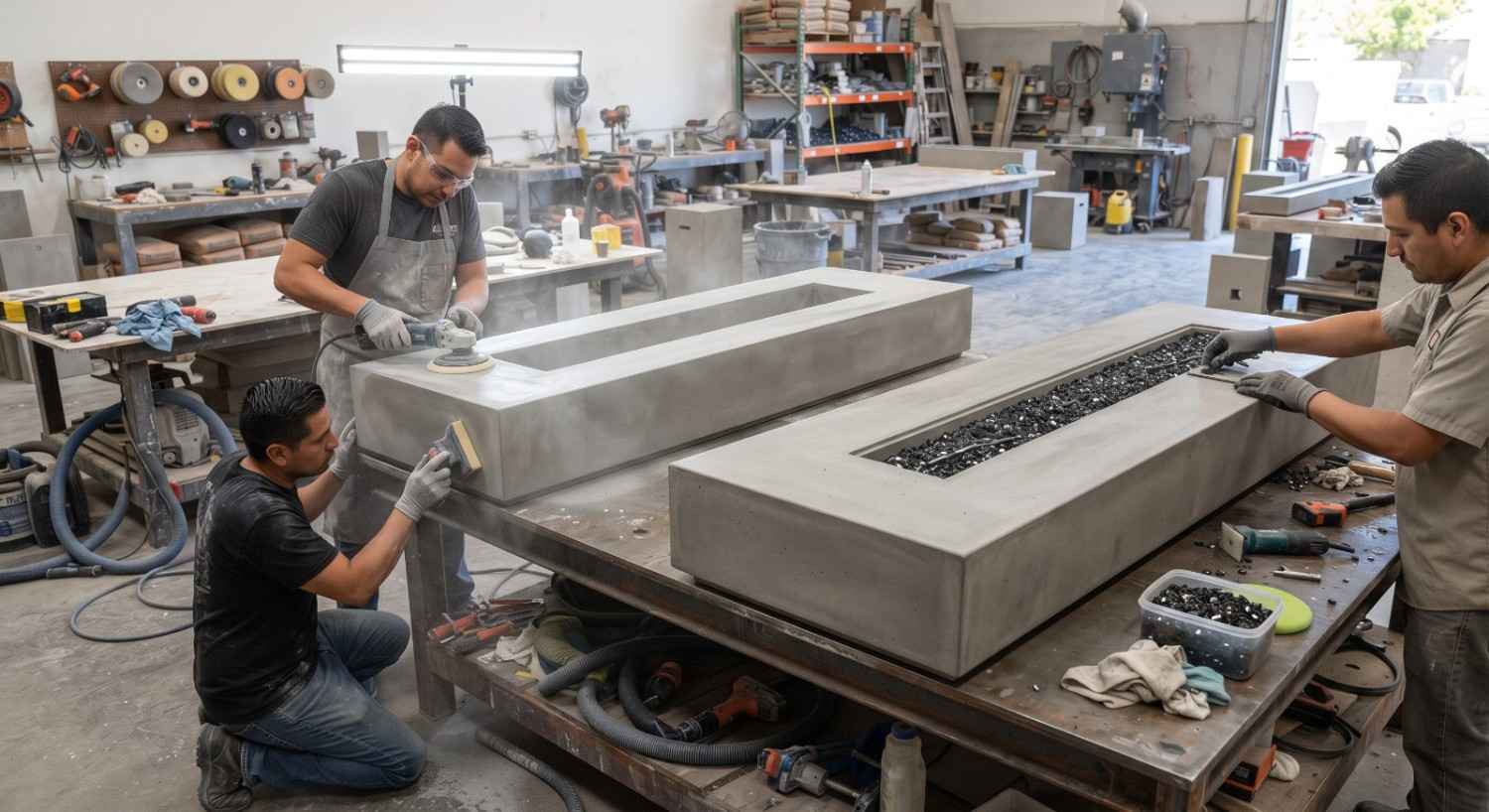
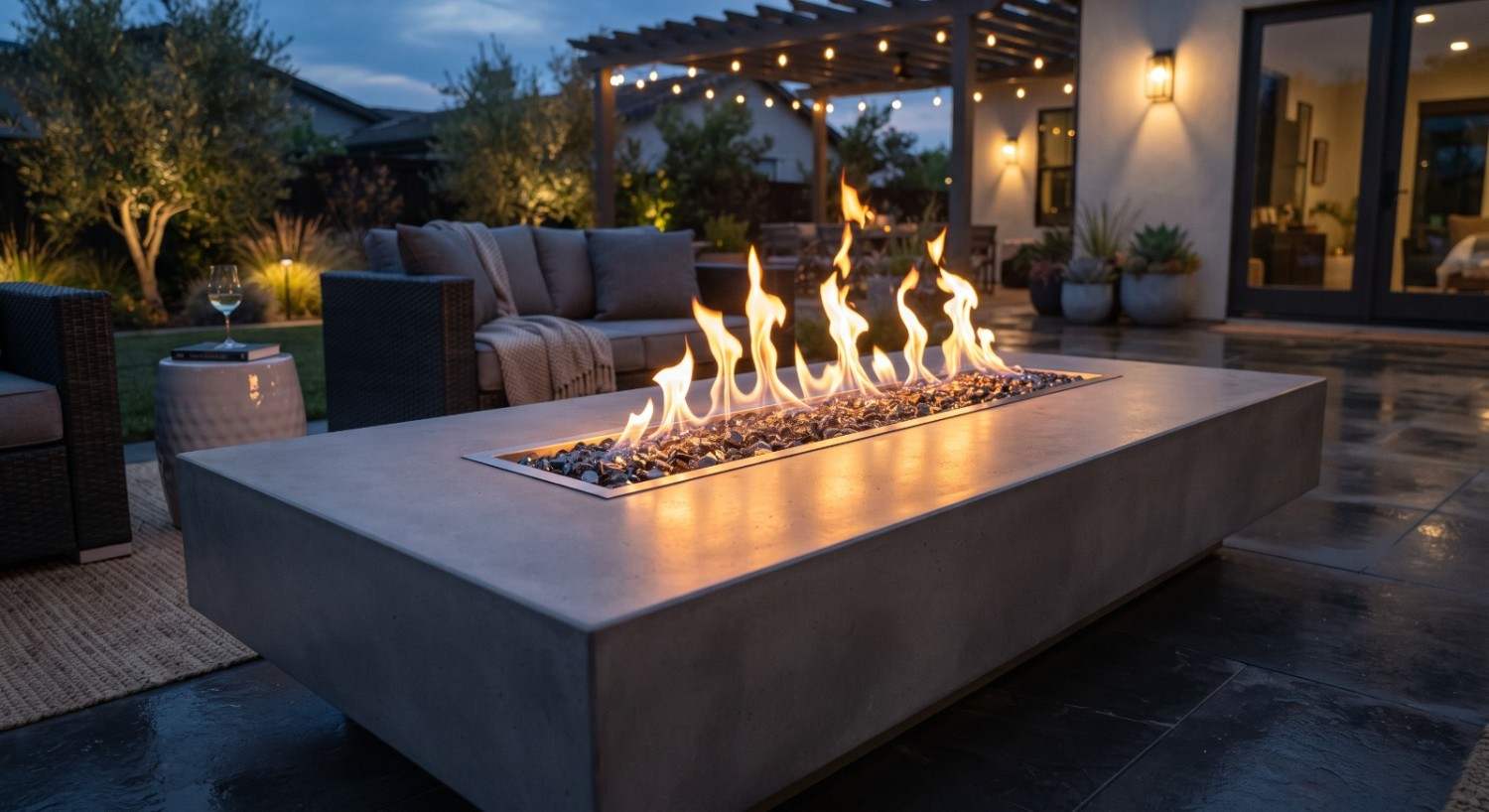
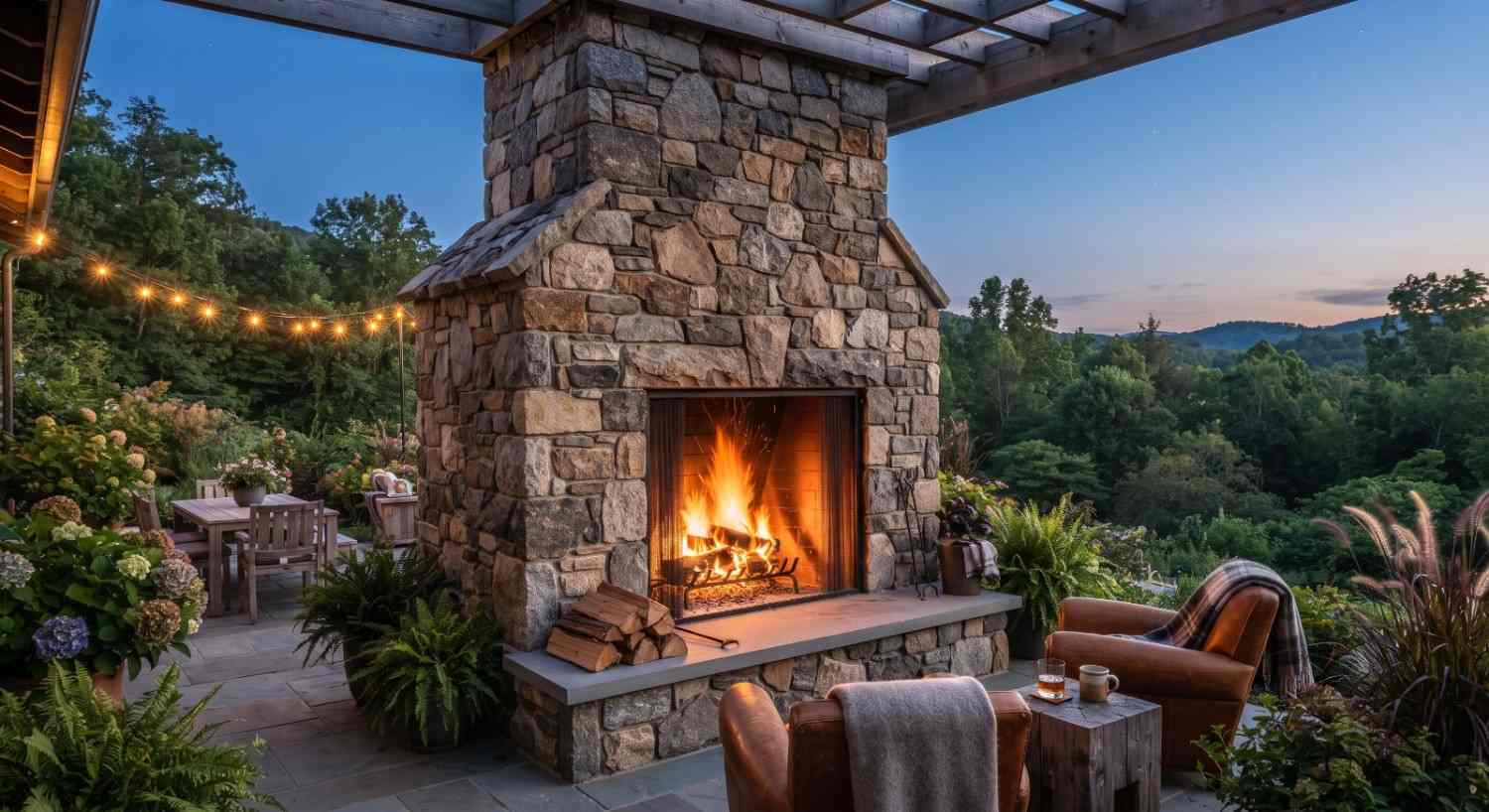
A fire pit is typically a lower, open feature built around a seating area, while an outdoor fireplace is a taller, more architectural structure that can anchor a patio the way a fireplace anchors an indoor living room. Both can run on wood or gas, and on a property with an aged wood fence nearby, that choice carries real weight: a wood-burning feature throws embers that a dry, weathered fence is more susceptible to catching than newer lumber or a non-combustible material would be.
Gas offers a genuine advantage here specifically, since it eliminates the ember risk entirely while still providing the same gathering focal point. If wood-burning ambiance matters enough to keep it in consideration, extra clearance from the fence, and regular clearing of dry leaf litter nearby, become part of the safety planning rather than an afterthought.
Regional Considerations
Built for Idaho’s Freeze and Thaw
A fire pit or fireplace is a masonry or built structure, and the same foundation principles apply here as anywhere else in Meridian. Idaho’s freeze/thaw cycles can shift a base that wasn’t set to an adequate depth, and for a taller outdoor fireplace, that kind of movement can eventually show up as cracking in the structure itself.
On an established property, it’s worth checking how a nearby existing structure has held up over the decades before building something new close to it, the same consideration that applies to any built feature on a lot this age. Gas fire features also need lines properly protected and, where applicable, shut off ahead of winter, regardless of what’s nearby.
An aged wood fence catches an ember more easily than a newer one. Let's plan clearance that actually accounts for that.
Get a Free Site MeasureFind out what your yard allows
We come out and tell you what you are allowed to build before anything is drawn. On site, at no cost.
Or call (208) 856-3233Feature Options
Fire Pit or Outdoor Fireplace?
Neither option is universally better, it depends on the look, footprint, and how much clearance your specific fence and landscaping actually allow.
Fire Pit
A lower, open feature built around seating, workable near an aged wood fence with proper ember clearance confirmed.
Outdoor Fireplace
A taller, more architectural structure that can anchor a patio, generally producing fewer stray embers than an open pit.
Wood-Burning
A more traditional experience with visible flame, though it requires real ember clearance from dry, aged fencing and leaf litter.
Gas-Fired
Simpler to light and extinguish, with no ember risk, often the more practical choice near an older wood fence.
Placement Considerations
Placement and Clearance Considerations
Distance from Aged Wood Fencing
Dry, weathered wood ignites more readily than newer lumber, warranting extra clearance for a wood-burning feature.
Dry Leaf Litter and Debris
Established landscaping can accumulate combustible debris near a fence line, worth clearing regularly near an open flame.
Wind Direction
Should guide where embers and smoke travel relative to seating and the fence.
Seating Distance
Close enough to feel the warmth, far enough to sit comfortably without excess heat or smoke.
Surface and Foundation
Proper base preparation suited to the feature’s weight and Idaho’s frost line requirements.
Explore Outdoor Kitchen Design
Not sure how much clearance your specific fence actually needs? Let's assess it together before choosing a spot.
Get a Free Site MeasurePlacement Planning
Planning the Feature Around Your Northeast Meridian Property
Placement starts with an honest look at your fence’s age and condition, since a decades-old wood fence carries a genuinely different ember risk than a newer installation would. From there, it’s a matter of confirming clearance, working out wind direction relative to that fence line, and deciding whether wood-burning ambiance is worth the extra safety planning or whether gas better suits the specific site.
Foundation work follows the same principles as any other built structure on the property, prepared to handle Idaho’s freeze/thaw conditions rather than added as an afterthought.
Process
From Idea to Fire Feature
Assess Fence Age and Condition
Determine how dry and weathered your existing wood fencing actually is.
Choose Fire Pit or Fireplace
Decide based on footprint, look, and how much ember exposure each option presents.
Select Fuel Type
Weigh wood-burning ambiance against gas’s elimination of ember risk near an aged fence.
Plan the Foundation
Build a base suited to the feature’s weight and Idaho’s frost line requirements.
Position for Comfort and Safety
Finalize placement relative to seating, the fence line, and prevailing wind direction.
Local Area Context
Fire Pits and Fireplaces Across Northeast Meridian
Established Northeast Meridian properties are more likely than newer developments to have original wood fencing that’s aged for decades, which introduces a genuine ember-related clearance consideration that a newer vinyl or recently installed fence wouldn’t carry in the same way. Combined with mature landscaping that can accumulate dry debris near a fence line, placement here benefits from a closer look than a newer property would need.
The right feature and placement come from assessing your specific fence and yard, not an assumption based on how established the neighborhood generally is.
Recent Work
Recent work
Our own work, photographed on site.


Approach
Which approach fits your space?
Outdoor Kitchen Construction
Pair a fire feature with a full kitchen build. Explore Construction
Covered Outdoor Kitchens
Add shade or shelter near your fire feature. Explore Covered Kitchens
Outdoor Kitchen Design
Plan placement and flow before construction begins. Explore Design
Built-In Pizza Ovens and Smokers
Consider a wood-fired oven alongside your fire feature. Explore Pizza Ovens & Smokers
Related
You may also be considering
Have an Aged Wood Fence Near Where You Want a Fire Feature?
Start with an honest look at its condition. We'll plan clearance and fuel type that actually accounts for it.
Or call (208) 856-3233Common Questions
Frequently asked questions
Cost depends on the feature type, size, fuel type, materials, and foundation work involved. Since this varies significantly by project, it’s best discussed directly for your specific plans.
Yes. Dry, weathered wood ignites more readily than newer lumber, which makes ember clearance from a decades-old fence a genuine safety consideration for a wood-burning feature.
An outdoor fireplace generally produces fewer stray embers than an open fire pit, though both benefit from confirmed clearance from aged wood fencing.
Permit requirements depend on the specific scope of work, particularly for gas lines or larger structural features. Confirm requirements for your project with the City of Meridian and the appropriate authorities.
Gas eliminates ember risk entirely, making it the more practical choice near a decades-old wood fence. Wood-burning remains an option with adequate clearance and regular debris clearing nearby.
Clearance requirements depend on the feature’s size, fuel type, and the fence’s specific condition and dryness. This should be confirmed for your specific installation and site.
Often, yes, depending on available space and how it affects traffic flow and smoke direction relative to the cook line. A site assessment can confirm what works best.
Yes. Like any built structure, the foundation needs to account for freeze/thaw movement, particularly for taller masonry fireplaces where shifting can eventually show up as structural cracking.
Explore Fire Pits and Outdoor Fireplaces across Meridian
Ready to Build a Gathering Spot That Respects Your Fence Line's Age?
Every established property has its own fencing history worth accounting for. Let's plan around yours.
Get a Free Site Measure