Southwest Meridian
Fire Pits and Outdoor Fireplaces in Southwest Meridian
A lot of rural acreage west of Ten Mile Road sits outside the natural gas utility's distribution territory entirely, which means the property runs on a propane tank instead.
10 years building in Meridian
70+ outdoor kitchens completed
RCE-69511 Idaho registration
Reviewed by Janine Burrows Outdoor Kitchen Designer and Erica Jensen Office Manager, Outdoor Kitchen & Patio
Natural gas service generally doesn’t reach the more rural stretches of Southwest Meridian, which means a real number of properties west of Ten Mile Road rely on a propane tank for cooking, heating, or any gas-fired outdoor feature. That tank, whether it’s a smaller cylinder or a larger buried or above-ground tank, has a required clearance distance from any open flame source, which directly shapes where a fire pit or fireplace can safely go.
East of Ten Mile Road, most standard lots are on natural gas, which removes this specific consideration from the placement conversation entirely.
Local Planning
What Fire Pits and Outdoor Fireplaces Look Like in Southwest Meridian
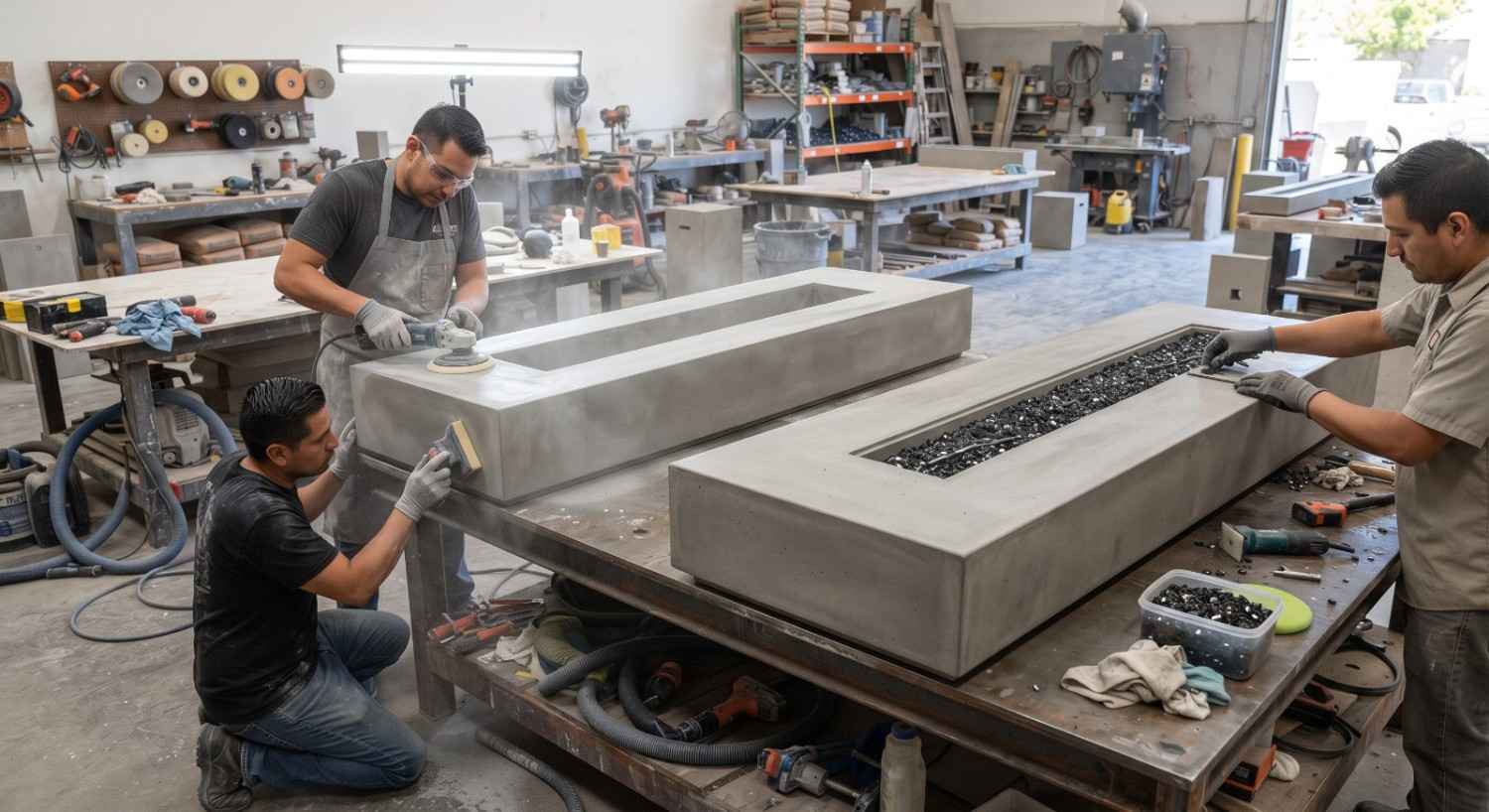
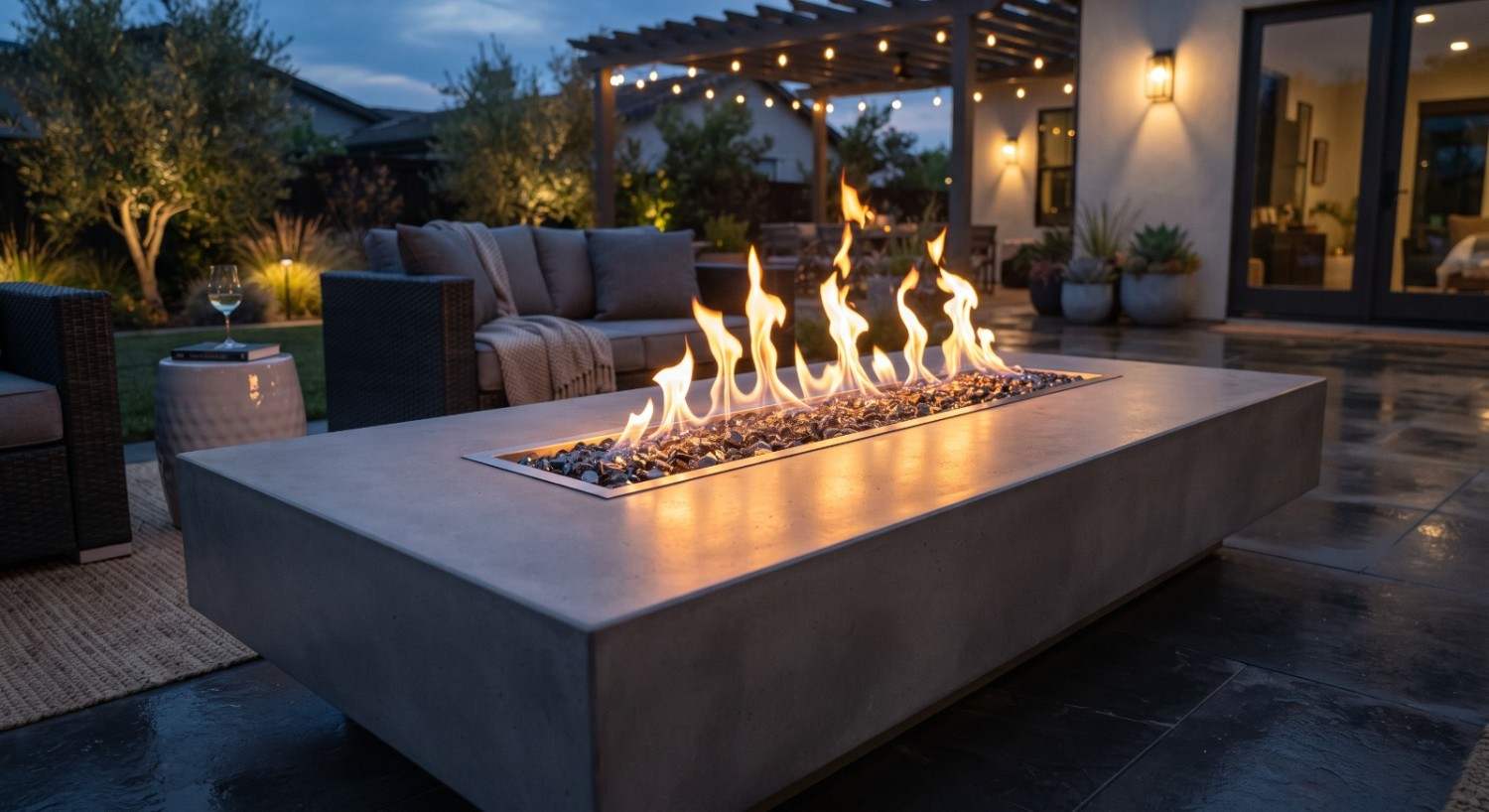
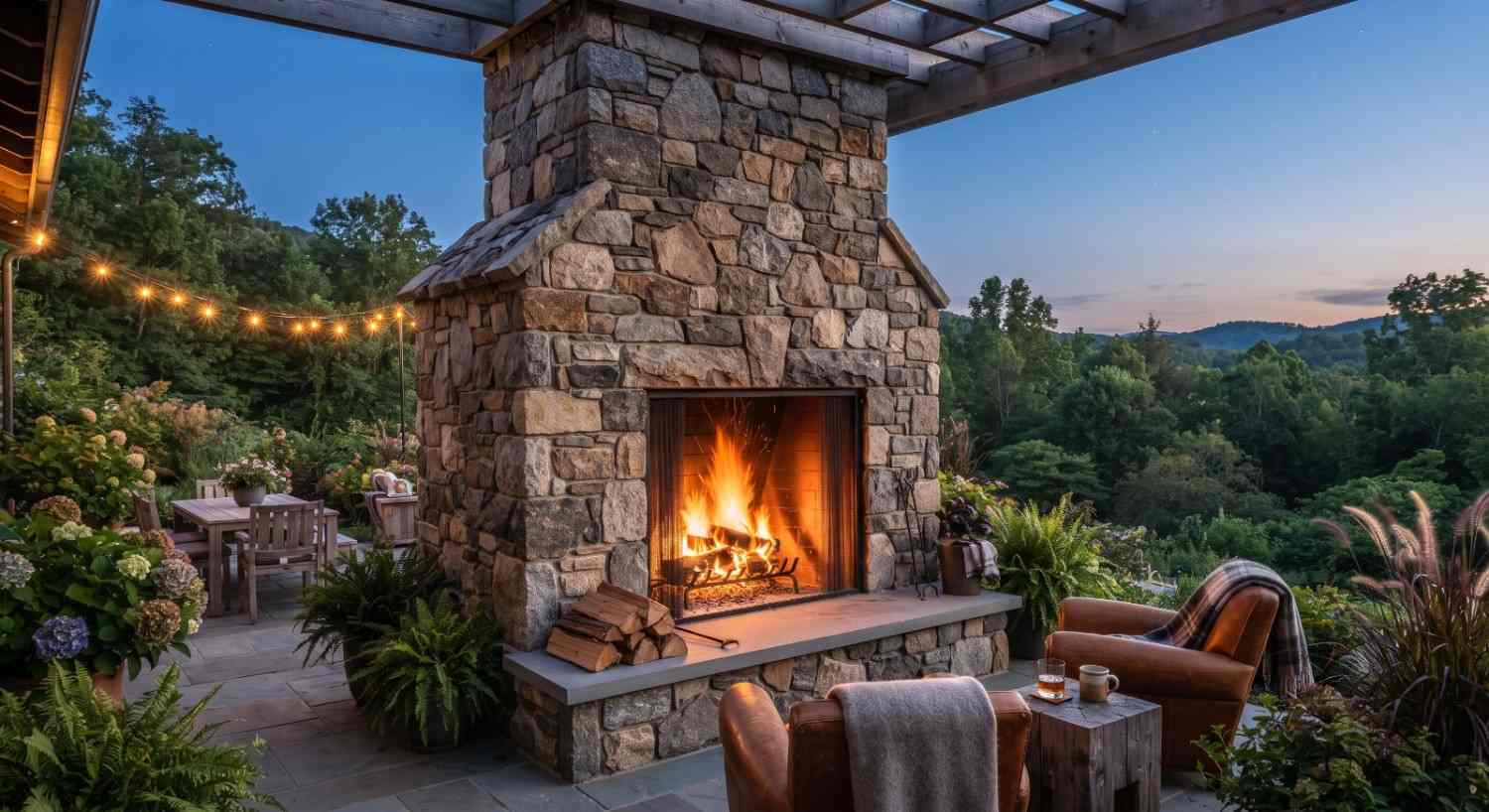
A fire pit is typically a lower, open feature built around a seating area, while an outdoor fireplace is a taller, more architectural structure that can anchor a patio the way a fireplace anchors an indoor living room. Both can run on wood or gas, and on a propane-served property, a gas-fired feature actually draws from the same tank supplying the rest of the house, which means the line run and clearance both need to be planned together rather than treated as separate questions.
A wood-burning feature sidesteps the propane clearance question but still needs its own safe distance from the tank simply because it’s an open flame source, regardless of fuel type. Either way, confirming the tank’s exact location and required clearance is a genuine first step here that a natural-gas property doesn’t share.
Regional Considerations
Built for Idaho’s Freeze and Thaw
A fire pit or fireplace is a masonry or built structure, and the same foundation principles apply regardless of fuel source. Idaho’s freeze/thaw cycles can shift a base that wasn’t set to an adequate depth, and for a taller outdoor fireplace, that kind of movement can eventually show up as cracking in the structure itself.
On a propane-served property, the gas line running from the tank to a gas-fired feature also needs the same winter protection consideration as any other buried line, and on a well and septic property, the footing should be confirmed clear of the septic drain field as well.
Your propane tank has a required clearance from any open flame. Let's confirm it before choosing where your fire feature goes.
Get a Free Site MeasureFind out what your yard allows
We come out and tell you what you are allowed to build before anything is drawn. On site, at no cost.
Or call (208) 856-3233Feature Options
Fire Pit or Outdoor Fireplace?
Neither option is universally better, it depends on the look, footprint, and how your specific property’s fuel source and layout affect placement.
Fire Pit
A lower, open feature built around seating, workable on either a propane or natural gas property with proper tank or line clearance confirmed.
Outdoor Fireplace
A taller, more architectural structure that can anchor a patio and, on open acreage, provide some natural wind-blocking.
Wood-Burning
Sidesteps the propane line question entirely, though it still requires safe distance from the tank as an open flame source.
Gas-Fired
On a propane property, draws from the same tank as the house, which means line routing and clearance are planned together.
Placement Considerations
Placement and Clearance Considerations
Propane Tank Clearance
A required safe distance from any open flame, worth confirming with your propane provider before finalizing a spot.
Wind Direction
On open acreage, prevailing wind should guide placement and orientation, especially for a wood-burning feature.
Seating Distance
Close enough to feel the warmth, far enough to sit comfortably without excess heat or smoke.
Septic Drain Field Clearance
On a well and septic property, confirm the footing sits clear of the drain field.
Surface and Foundation
Proper base preparation suited to the feature’s weight and Idaho’s frost line requirements.
Explore Outdoor Kitchen Design
Not sure how far your fire feature needs to sit from your propane tank? Let's confirm it together.
Get a Free Site MeasurePlacement Planning
Planning the Feature Around Your Southwest Meridian Property
On a propane-served property, planning starts with locating the tank and confirming its required clearance from any open flame, since that distance rules out certain placement options before wind or aesthetics even enter the conversation. On a natural gas property, that step simply isn’t necessary, and planning can move straight to wind direction and layout.
Foundation work follows the same principles either way, prepared to handle Idaho’s freeze/thaw conditions rather than added as an afterthought.
Process
From Idea to Fire Feature
Confirm Your Fuel Source
Determine whether your property is on natural gas or a propane tank.
Locate the Propane Tank and Confirm Clearance
If applicable, establish the required safe distance before choosing a spot.
Choose Fire Pit or Fireplace
Decide based on footprint, look, and wind exposure on your property.
Select Fuel Type
Weigh wood-burning against gas, factoring in tank line routing if propane-served.
Plan the Foundation
Build a base suited to the feature’s weight and Idaho’s frost line requirements.
Local Area Context
Fire Pits and Fireplaces Across Southwest Meridian
West of Ten Mile Road, a meaningful number of rural properties sit outside natural gas distribution territory and rely on propane instead, which introduces a genuine, area-specific clearance requirement for any fire feature that a standard natural-gas lot east of the road doesn’t share. Wind exposure on open acreage remains a factor regardless of fuel source.
The right feature and placement come from your specific property’s fuel source and layout, not a standard setup applied across the area.
Recent Work
Recent work
Our own work, photographed on site.

Approach
Which approach fits your space?
Outdoor Kitchen Construction
Pair a fire feature with a full kitchen build. Explore Construction
Covered Outdoor Kitchens
Add wind protection near your fire feature. Explore Covered Kitchens
Outdoor Kitchen Design
Plan placement and flow before construction begins. Explore Design
Built-In Pizza Ovens and Smokers
Consider a wood-fired oven alongside your fire feature. Explore Pizza Ovens & Smokers
Related
You may also be considering
On Propane? Let's Plan Your Fire Feature Around It.
Start with your tank's location and required clearance. We'll help you find a spot that's both safe and genuinely enjoyable to use.
Or call (208) 856-3233Common Questions
Frequently asked questions
Cost depends on the feature type, size, fuel type, materials, and foundation work involved. Since this varies significantly by project, it’s best discussed directly for your specific plans.
Required clearance depends on the tank’s size and type. Your propane provider or local fire code can confirm the exact distance for your specific setup.
Yes, with proper clearance confirmed and respected. This is a standard consideration on any propane-served property, not a reason to avoid a fire feature.
Permit requirements depend on the specific scope of work, particularly for gas lines or larger structural features. Confirm requirements for your project with the City of Meridian and the appropriate authorities.
Wood-burning sidesteps the propane line question but still needs safe distance from the tank. Gas draws from the same tank as your house, which means line routing and clearance are planned together.
Check your utility bills or service provider. If you don’t receive a natural gas bill and instead schedule propane deliveries, your property is propane-served.
Yes. Like any built structure, the foundation needs to account for freeze/thaw movement, particularly for taller masonry fireplaces where shifting can eventually show up as structural cracking.
Many can, particularly gas features with straightforward ignition. Usability depends on the specific feature, its exposure to wind, and whether it’s paired with any windbreak or covered structure nearby.
Explore Fire Pits and Outdoor Fireplaces across Meridian
Ready to Build a Fire Feature That Respects Your Property's Setup?
Every propane-served property has a spot that works. Let's find yours.
Get a Free Site Measure