Southeast Meridian
Fire Pits and Outdoor Fireplaces in Southeast Meridian
Treasure Valley winters bring inversions, stretches of days when cold air gets trapped under a warmer layer and pollution has nowhere to go, and on the worst of those days, Idaho's Department of Environmental Quality...
10 years building in Meridian
70+ outdoor kitchens completed
RCE-69511 Idaho registration
Reviewed by Janine Burrows Outdoor Kitchen Designer and Erica Jensen Office Manager, Outdoor Kitchen & Patio
Winter inversions are a genuine feature of Treasure Valley weather, and on advisory days, Idaho DEQ restricts wood-burning devices to help keep trapped pollution from building up further. A wood-burning fire pit or fireplace is subject to those restrictions the same way an indoor wood stove would be, which means a family that wants reliable use through the coldest, stillest days of winter is worth thinking through fuel type with that pattern in mind.
Gas features aren’t affected by burn bans the same way, which makes them the more consistently usable option specifically during the stretch of winter when a fire feature would otherwise feel most appealing.
Local Planning
What Fire Pits and Outdoor Fireplaces Look Like in Southeast Meridian
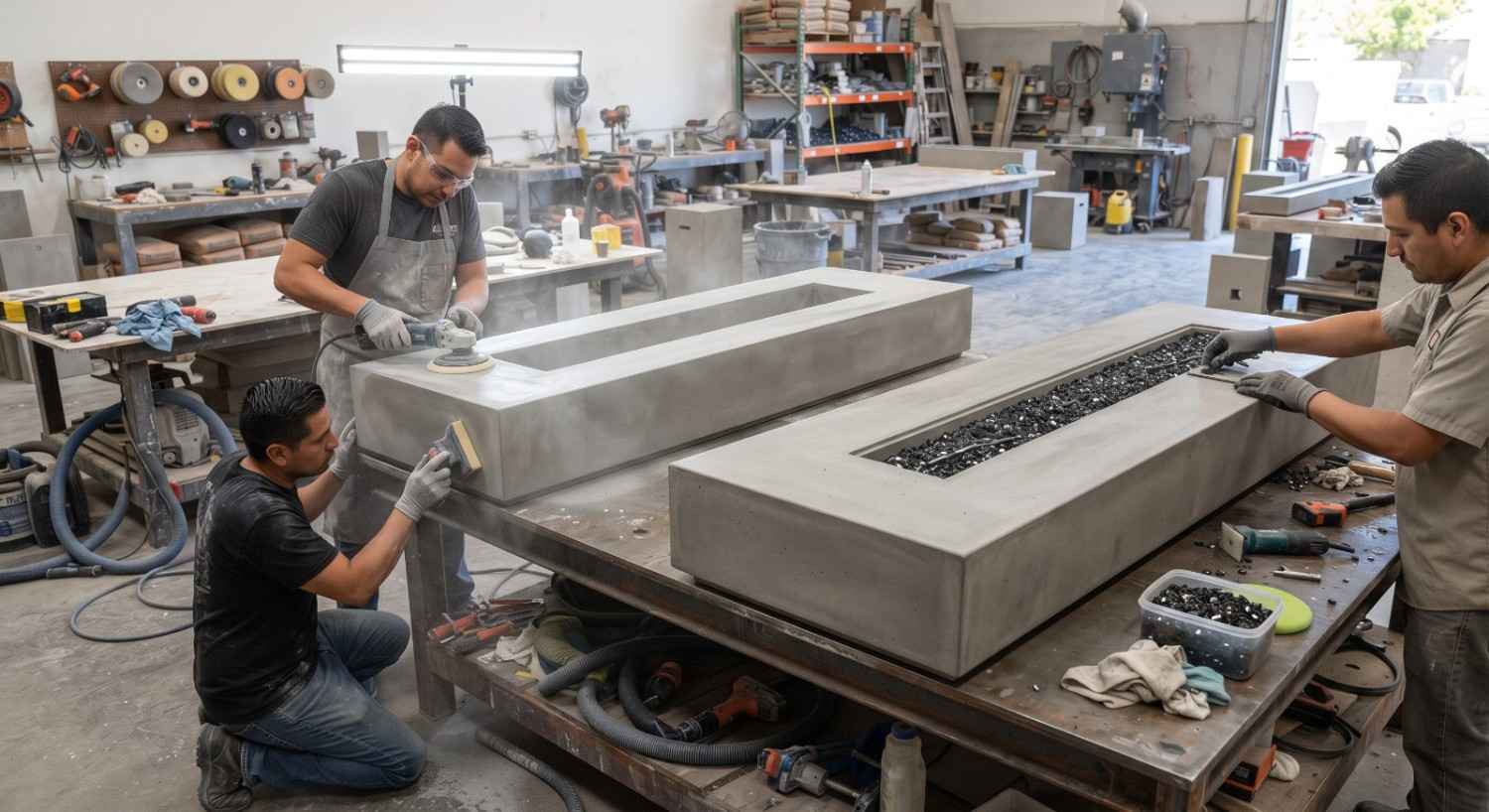
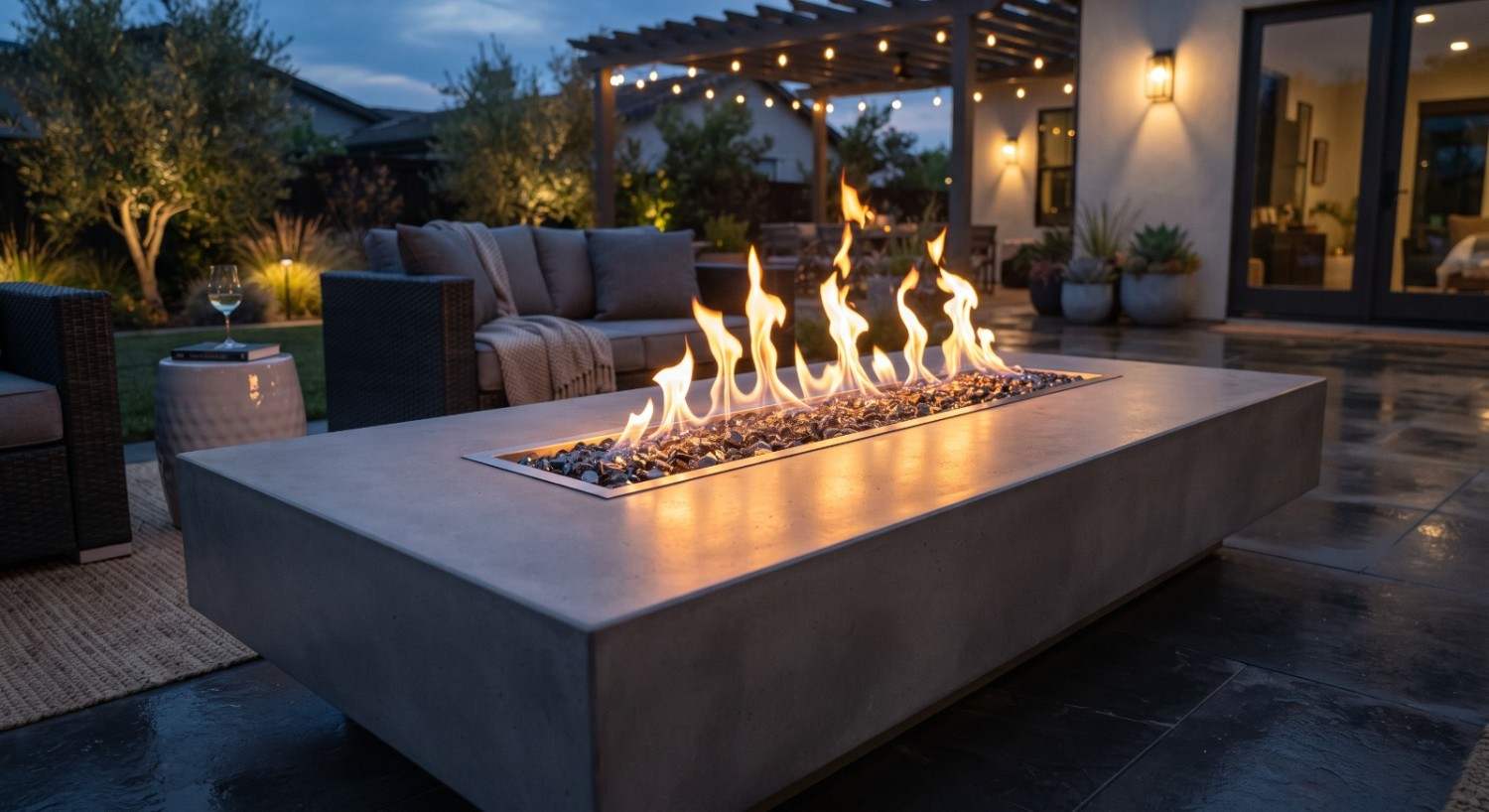
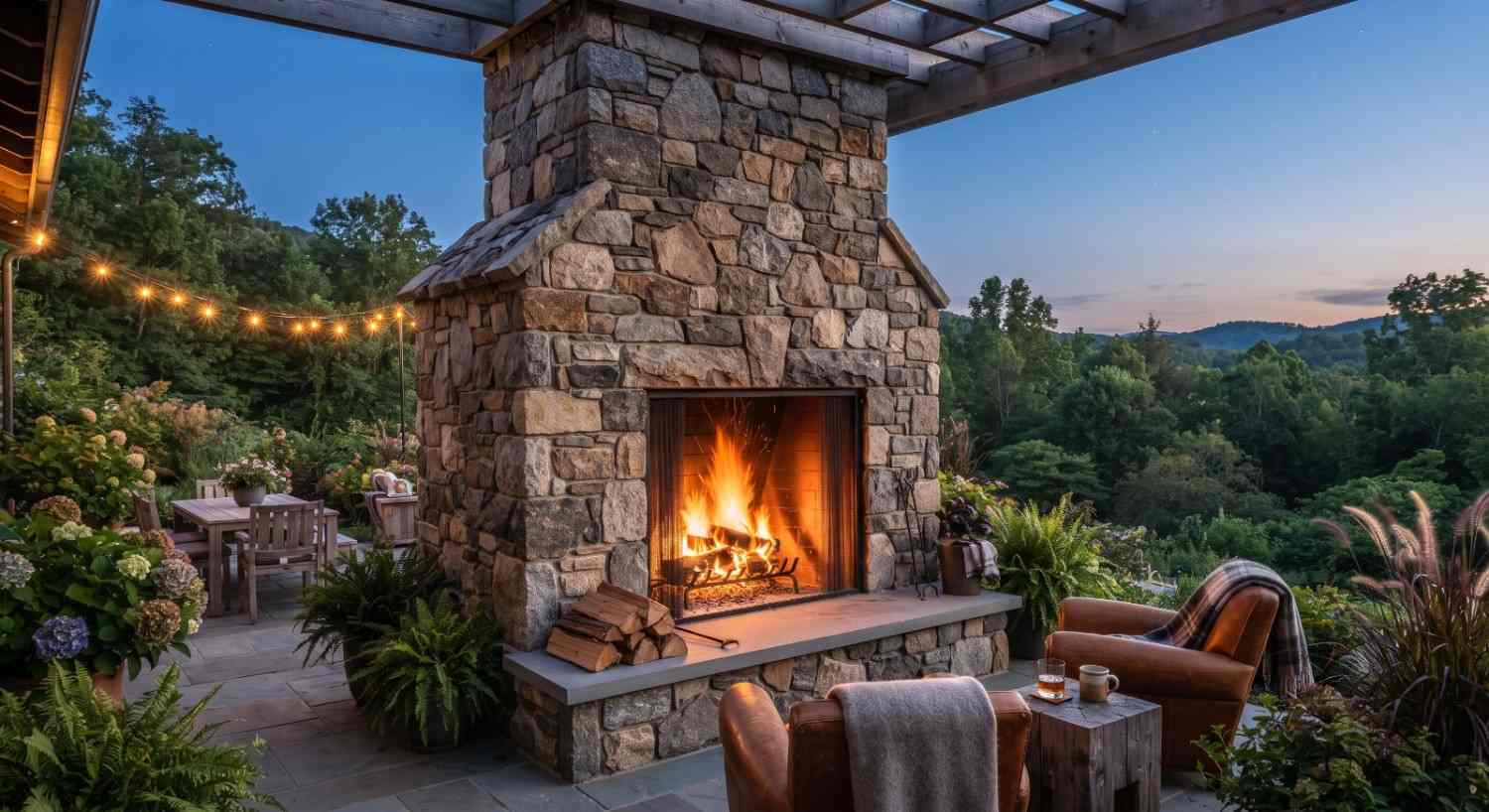
A fire pit is typically a lower, open feature built around a seating area, while an outdoor fireplace is a taller, more architectural structure that can anchor a patio the way a fireplace anchors an indoor living room. Both can run on wood or gas, and in a family backyard, that choice affects more than ambiance. A gas feature stays available on inversion advisory days when a wood-burning one legally shouldn’t be lit, which matters if the feature is meant to be a reliable weekend gathering spot all winter, not just on the days air quality happens to cooperate.
Placement should still account for wind direction and seating distance the way it would anywhere, with the added benefit that a gas feature’s more consistent flame control makes it easier to manage around kids moving in and out of the seating area.
Regional Considerations
Built for Idaho’s Freeze and Thaw
A fire pit or fireplace is a masonry or built structure, and the same foundation principles apply here as anywhere else in Meridian. Idaho’s freeze/thaw cycles can shift a base that wasn’t set to an adequate depth, and for a taller outdoor fireplace, that kind of movement can eventually show up as cracking in the structure itself.
On a newer property, drainage and grading haven’t settled into decades of habits yet, which usually makes it easier to plan the foundation and surrounding water routing correctly the first time. Gas fire features also need lines that are properly protected and, where applicable, shut off ahead of extended freezing stretches.
A wood-burning feature can't be lit on an inversion advisory day. Let's plan fuel type around when you'll actually want to use it.
Get a Free Site MeasureFind out what your yard allows
We come out and tell you what you are allowed to build before anything is drawn. On site, at no cost.
Or call (208) 856-3233Feature Options
Fire Pit or Outdoor Fireplace?
Neither option is universally better, it depends on the look, footprint, and how much winter reliability matters to your household.
Fire Pit
A lower, open feature built around seating, well suited to easy family gathering, with gas as the more consistently usable fuel through inversion season.
Outdoor Fireplace
A taller, more architectural structure that can anchor a patio, available in both wood and gas configurations.
Wood-Burning
A more traditional experience with visible flame, subject to DEQ burn ban restrictions on advisory days each winter.
Gas-Fired
Simpler to light and extinguish, with consistent availability regardless of air quality advisories.
Placement Considerations
Placement and Clearance Considerations
Fuel Type and Winter Reliability
Gas features remain usable during burn ban advisories; wood-burning features do not.
Distance from Structures
Combustible materials, overhangs, and covered structures all affect safe placement.
Wind Direction
Should guide where smoke and heat travel relative to seating.
Seating Distance
Close enough to feel the warmth, far enough to sit comfortably without excess heat or smoke.
Surface and Foundation
Proper base preparation suited to the feature’s weight and Idaho’s frost line requirements.
Explore Outdoor Kitchen Design
Not sure how often a wood-burning feature would actually be usable through a Treasure Valley winter? Let's talk through the realistic pattern.
Get a Free Site MeasurePlacement Planning
Planning the Feature Around Your Southeast Meridian Property
For a household that wants a fire feature usable throughout the winter, planning starts with an honest conversation about fuel type and inversion season, since a handful of the year’s coldest, stillest evenings, exactly when a fire feature feels most appealing, are also when a burn ban is most likely to be in effect.
From there, placement follows the usual considerations: clearance, wind direction, and how the feature relates to the rest of the yard and any existing kitchen.
Process
From Idea to Fire Feature
Consider Fuel Type Against Winter Use
Weigh wood-burning ambiance against gas’s consistent availability during inversion season.
Assess the Space
Review clearance, seating locations, and prevailing wind direction.
Choose Fire Pit or Fireplace
Decide based on footprint and how the feature will anchor family gatherings.
Plan the Foundation
Build a base suited to the feature’s weight and Idaho’s frost line requirements.
Position for Comfort
Finalize placement relative to seating, structures, and smoke direction.
Local Area Context
Fire Pits and Fireplaces Across Southeast Meridian
Winter inversions are a genuine, recurring feature of Treasure Valley weather, and the resulting DEQ burn ban advisories apply to wood-burning fire features across all of Meridian, Southeast included. For a family-active area where a fire feature often doubles as a cool-weather gathering spot, that seasonal restriction is worth factoring into fuel choice from the start.
The right feature still comes from how your specific household wants to use the space, not an assumption that wood-burning ambiance is available every winter evening.
Recent Work
Recent work
Our own work, photographed on site.

Approach
Which approach fits your space?
Outdoor Kitchen Construction
Pair a fire feature with a full kitchen build. Explore Construction
Covered Outdoor Kitchens
Add shade or shelter near your fire feature. Explore Covered Kitchens
Outdoor Kitchen Design
Plan placement and flow before construction begins. Explore Design
Built-In Pizza Ovens and Smokers
Consider a wood-fired oven alongside your fire feature. Explore Pizza Ovens & Smokers
Related
You may also be considering
Want a Fire Feature That Works All Winter, Advisory Days Included?
Start with how reliably you want to use it. We'll help you pick a fuel type and placement that actually delivers that.
Or call (208) 856-3233Common Questions
Frequently asked questions
Cost depends on the feature type, size, fuel type, materials, and foundation work involved. Since this varies significantly by project, it’s best discussed directly for your specific plans.
Idaho DEQ issues burn ban advisories during winter inversions to limit added pollution when air quality is already poor. Wood-burning fire pits and fireplaces are subject to these restrictions the same way indoor wood stoves are.
Frequency varies by winter and weather pattern, but they’re a recurring feature of the region’s inversion season, worth planning around if wood-burning reliability matters to your household.
Gas remains usable regardless of air quality advisories, making it the more consistently available option through inversion season. Wood-burning offers a different experience but comes with that seasonal limitation.
Permit requirements depend on the specific scope of work, particularly for gas lines or larger structural features. Confirm requirements for your project with the City of Meridian and the appropriate authorities.
Clearance requirements depend on the feature’s size, fuel type, and local regulations, which should be confirmed for your specific installation and site.
Often, yes, depending on available space and how it affects traffic flow and smoke direction relative to the cook line. A site assessment can confirm what works best.
Yes. Like any built structure, the foundation needs to account for freeze/thaw movement, particularly for taller masonry fireplaces where shifting can eventually show up as structural cracking.
Explore Fire Pits and Outdoor Fireplaces across Meridian
Ready to Build a Fire Feature You Can Actually Count On?
Every Southeast Meridian winter brings a few advisory days. Let's plan around them, not against them.
Get a Free Site Measure