Northwest Meridian
Fire Pits and Outdoor Fireplaces in Northwest Meridian
A fair number of homes in newer Northwest Meridian developments were sold with a gas line already stubbed out to a designated spot in the backyard, offered as a purchase-time upgrade for a future fire pit.
10 years building in Meridian
70+ outdoor kitchens completed
RCE-69511 Idaho registration
Reviewed by Janine Burrows Outdoor Kitchen Designer and Erica Jensen Office Manager, Outdoor Kitchen & Patio
Builders in developments like Paramount and Sawtooth Creek often sell a gas stub-out to a predetermined patio location as a low-cost upgrade during the original sale, betting that most buyers will eventually want a fire feature somewhere in the yard. That spot was chosen to be generically workable across many similar lots in the phase, not necessarily optimized for how your household actually uses the space.
If you have one of these stub-outs, it’s worth treating it as a starting option rather than a final answer. Extending or relocating a gas line is a normal part of the process if the builder’s chosen spot doesn’t actually fit your layout.
Local Planning
What Fire Pits and Outdoor Fireplaces Look Like in Northwest Meridian
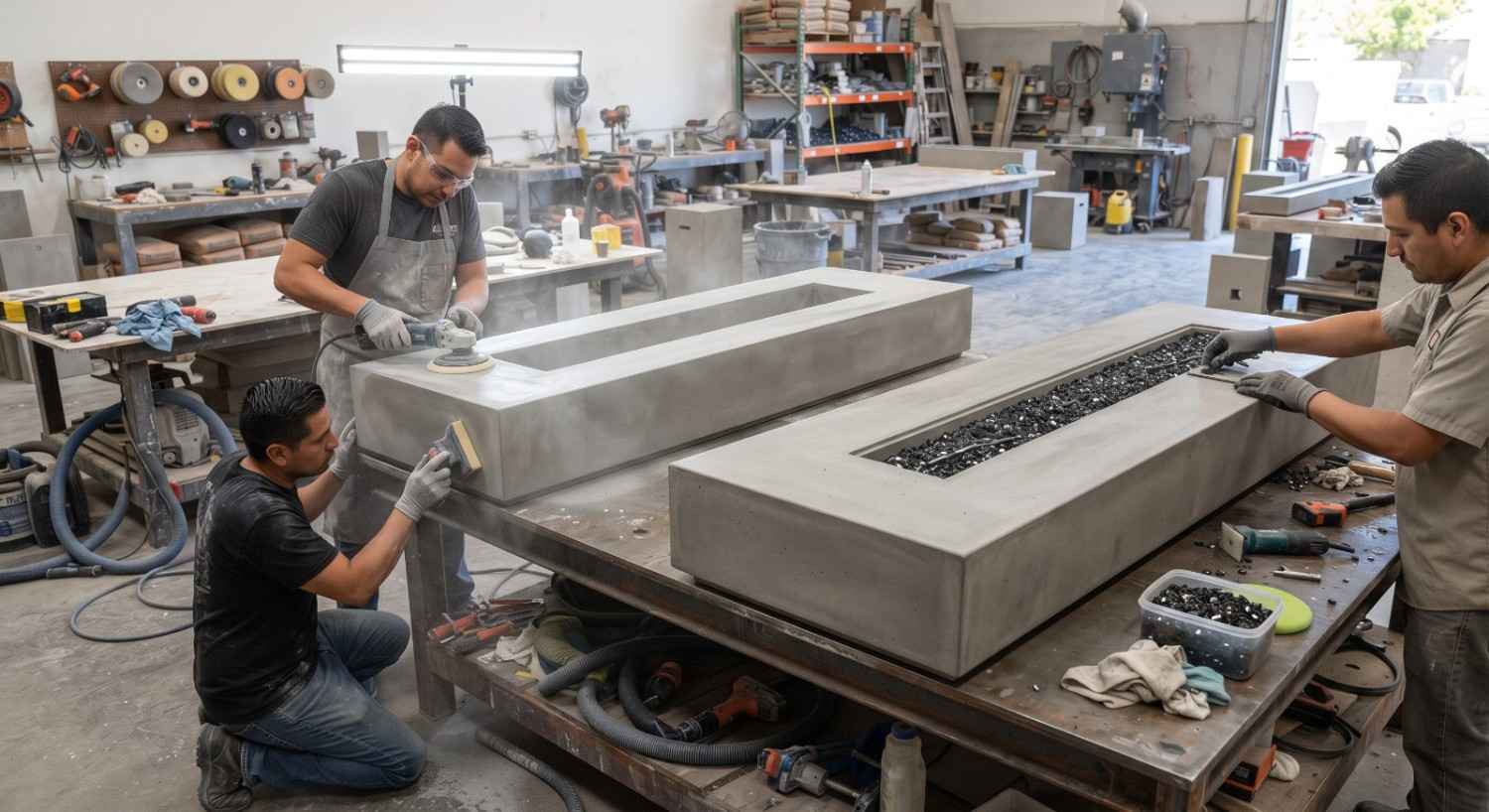
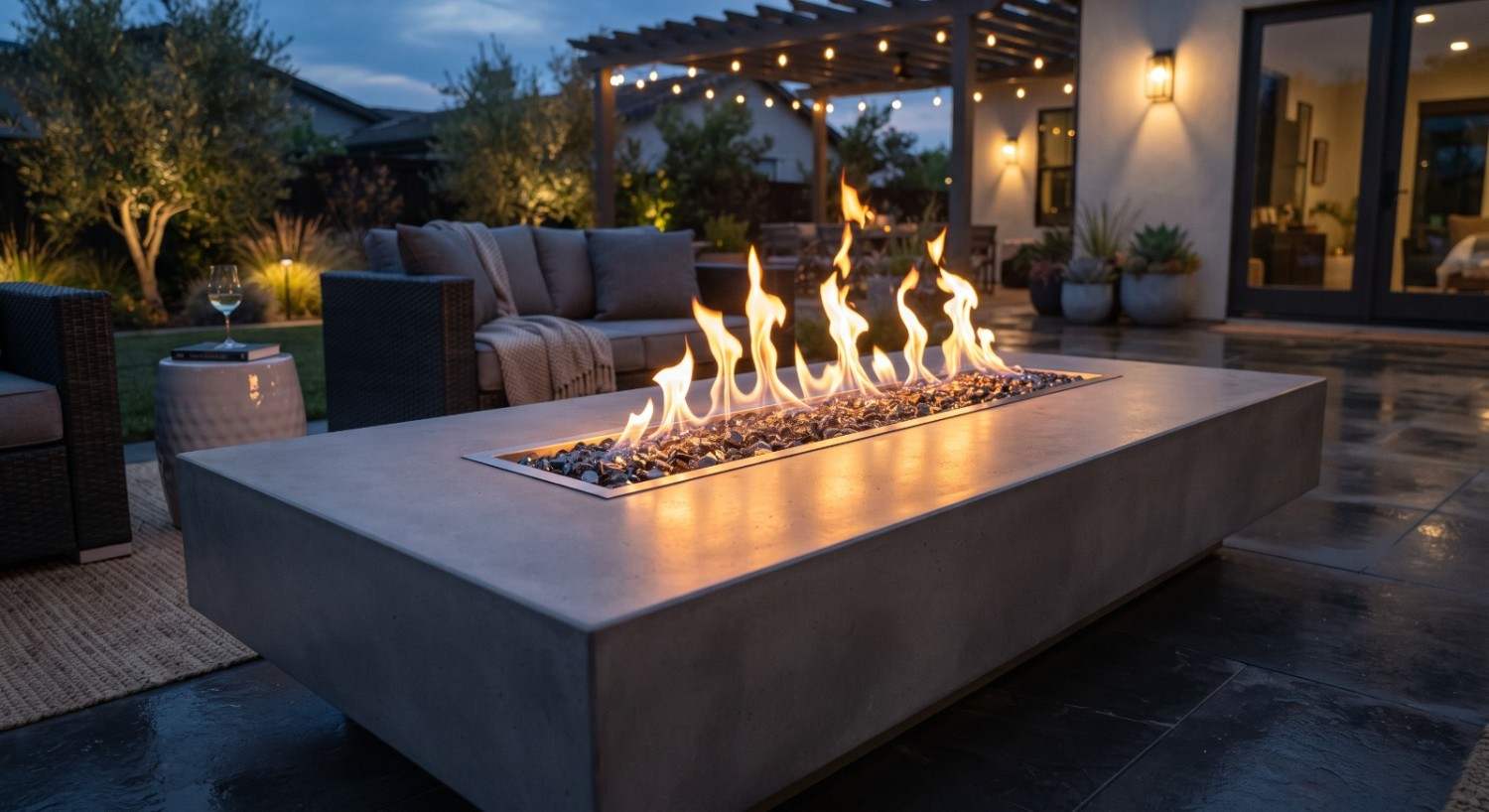
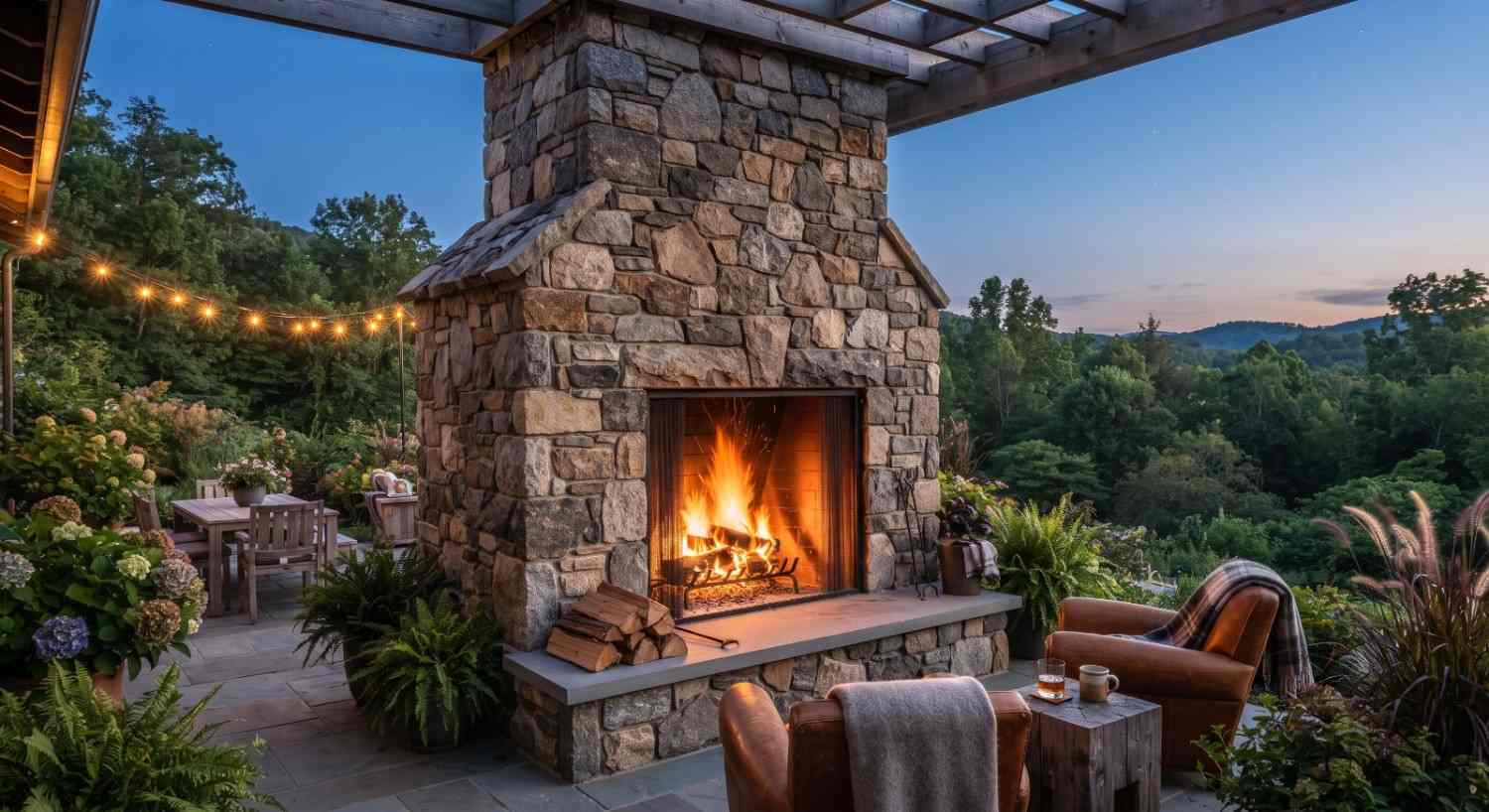
A fire pit is typically a lower, open feature built around a seating area, while an outdoor fireplace is a taller, more architectural structure that can anchor a patio the way a fireplace anchors an indoor living room. Both can run on wood or gas, and if your home already has a builder-installed gas stub, that infrastructure often makes gas the more cost-effective choice by default, simply because the expensive part of the utility work is already done.
Placement still deserves real thought beyond just using the existing stub. Most of these lots are wide open with little established landscaping or fencing yet, which means a fire feature is more visible to neighboring yards than it might be once privacy landscaping grows in over the next several years. Positioning seating to feel enclosed, even without mature hedges yet, is worth factoring into the design now.
Regional Considerations
Built for Idaho’s Freeze and Thaw
A fire pit or fireplace is a masonry or built structure, and the same foundation principles apply here as anywhere else in Meridian. Idaho’s freeze/thaw cycles can shift a base that wasn’t set to an adequate depth, and for a taller outdoor fireplace, that kind of movement can eventually show up as cracking in the structure itself.
On a recently graded Northwest Meridian lot, it’s worth confirming the fill soil beneath the intended footing has settled adequately before building on it, particularly if the feature is heavier than what a standard gas fire pit kit would require. Gas fire features also need lines properly protected and, where applicable, shut off ahead of winter, which matters whether that line was builder-installed or added as part of your project.
A builder's gas stub is a good starting point, not a final decision. Let's figure out where the fire feature actually belongs in your yard.
Get a Free Site MeasureFind out what your yard allows
We come out and tell you what you are allowed to build before anything is drawn. On site, at no cost.
Or call (208) 856-3233Feature Options
Fire Pit or Outdoor Fireplace?
Neither option is universally better, it depends on the look, footprint, and how much your builder’s existing gas infrastructure lines up with your actual preferences.
Fire Pit
A lower, open feature built around seating, often the simplest match for an existing builder-installed gas stub-out.
Outdoor Fireplace
A taller, more architectural structure that can anchor a patio, though it may require extending gas or utility lines beyond a builder’s original stub location.
Wood-Burning
A more traditional experience with visible flame, though it bypasses any existing gas infrastructure entirely.
Gas-Fired
Simpler to light and extinguish, and often the most cost-effective option where a stub-out already exists.
Placement Considerations
Placement and Clearance Considerations
Existing Gas Stub Location
Worth confirming exactly where it terminates and whether that spot actually suits your intended layout.
Open Sightlines
Without mature fencing or landscaping yet, a fire feature here is more visible to neighboring yards than it will be in a few years.
Wind Direction
Prevailing wind on an open lot should guide where smoke and heat travel relative to seating.
Seating Distance
Close enough to feel the warmth, far enough to sit comfortably without excess heat or smoke.
Surface and Foundation
Proper base preparation suited to the feature’s weight and Idaho’s frost line requirements.
Explore Outdoor Kitchen Design
Not sure if your builder's gas stub is actually in the right spot? Let's walk the yard and find out.
Get a Free Site MeasurePlacement Planning
Planning the Feature Around Your Northwest Meridian Property
If your home came with a builder-installed gas stub, the first real question is whether that predetermined location genuinely fits how you use the yard, or whether it was simply the most convenient spot for the builder to run a line during original construction. Relocating or extending the line is a normal, often modest addition to the project if the answer is the latter.
From there, it’s a matter of confirming clearance, working out wind direction and smoke path, and accounting for how visible the feature will be to neighboring yards until landscaping and fencing mature.
Process
From Idea to Fire Feature
Locate Any Existing Gas Stub
Confirm whether your home has a builder-installed line and exactly where it terminates.
Decide Whether to Use or Relocate It
Evaluate if the existing location actually fits your preferred layout.
Choose Fire Pit or Fireplace
Decide based on footprint, look, and how the existing infrastructure factors in.
Plan the Foundation
Build a base suited to the feature’s weight and Idaho’s frost line requirements.
Position for Comfort and Privacy
Finalize placement accounting for currently open sightlines to neighboring yards.
Local Area Context
Fire Pits and Fireplaces Across Northwest Meridian
Builder-installed gas stub-outs are common across developments like Paramount, BridgeTower West, and Sawtooth Creek, offered as a standard upgrade option during the original home sale. That infrastructure is a genuine head start, but it’s worth evaluating honestly rather than assuming the builder’s chosen spot is automatically the right one for your household.
The right feature and placement come from your specific yard and your actual habits, not simply wherever a gas line happens to already be.
Recent Work
Recent work
Our own work, photographed on site.


Approach
Which approach fits your space?
Outdoor Kitchen Construction
Pair a fire feature with a full kitchen build. Explore Construction
Covered Outdoor Kitchens
Add shade or shelter near your fire feature. Explore Covered Kitchens
Outdoor Kitchen Design
Plan placement and flow before construction begins. Explore Design
Built-In Pizza Ovens and Smokers
Consider a wood-fired oven alongside your fire feature. Explore Pizza Ovens & Smokers
Related
You may also be considering
Have a Builder-Installed Gas Stub You're Not Sure About?
Start with what's already there. We'll help you figure out whether it's in the right spot, or where the fire feature actually belongs.
Or call (208) 856-3233Common Questions
Frequently asked questions
Cost depends on the feature type, size, fuel type, materials, and whether an existing gas stub can be used or needs to be extended. Since this varies significantly by project, it’s best discussed directly for your specific plans.
No. It’s a convenient starting point since the utility work is already done, but the line can be extended or relocated if that spot doesn’t actually suit your layout.
Check your original builder documents or purchase agreement, which typically list any upgrade packages included at closing, or have a professional locate confirm what’s already run to the yard.
Permit requirements depend on the specific scope of work, particularly for gas lines or larger structural features. Confirm requirements for your project with the City of Meridian and the appropriate authorities.
Likely more so than it will be in a few years, since most newer Northwest Meridian lots don’t yet have mature fencing or landscaping to provide privacy. This is worth factoring into placement and seating orientation.
Gas is usually the more cost-effective choice when a line already exists, since the main utility work is already in place. Wood-burning remains an option but doesn’t take advantage of the existing infrastructure.
Yes. Like any built structure, the foundation needs to account for freeze/thaw movement, and on a recently graded lot, fill soil settling is worth confirming before building.
Many can, particularly gas features with straightforward ignition. Usability depends on the specific feature, its exposure to wind, and whether it’s paired with any covered structure nearby.
Explore Fire Pits and Outdoor Fireplaces across Meridian
Ready to Decide Where Your Fire Feature Actually Belongs?
Whether you're starting from a builder's stub or a blank yard, let's find the right spot.
Get a Free Site Measure