Winterization
Outdoor Kitchen Winterization
Water lines cleared, appliances covered, everything ready to sit out the winter. An hour in October saves a repair bill in April.
10 years building in Meridian
70+ outdoor kitchens completed
RCE-69511 Idaho registration
Reviewed by Janine Burrows Outdoor Kitchen Designer and Erica Jensen Office Manager, Outdoor Kitchen & Patio Last checked September 2026
Getting it shut down properly before the first hard freeze. Water lines cleared, appliances covered, everything ready to sit out the winter.
An hour in October saves a repair bill in April. Almost every failure we are called to in spring traces back to water that was still sitting in something in November.
The Work
What does winterizing involve?
Clearing every line that holds water, protecting what stays outside, and shutting off what should not be live.
An hour or two of work on most kitchens. What it prevents is a split line inside a masonry frame, which is not an hour or two of anything.
Water lines cleared
Blown out so nothing is left to freeze and split a pipe or a valve.
The trap emptied
The part everybody forgets. It is designed to hold water, which is exactly what you do not want in January.
Refrigeration shut down
Emptied, cleaned and switched off, or taken out where it was never rated to sit outside.
Grill cleaned and covered
Gas isolated at the supply, grease cleared, and a cover that actually fits.
Cabinets emptied
Anything that does not want a cold, damp winter comes out and goes in the garage.
Drainage checked
So meltwater leaves the frame in February rather than sitting inside it.
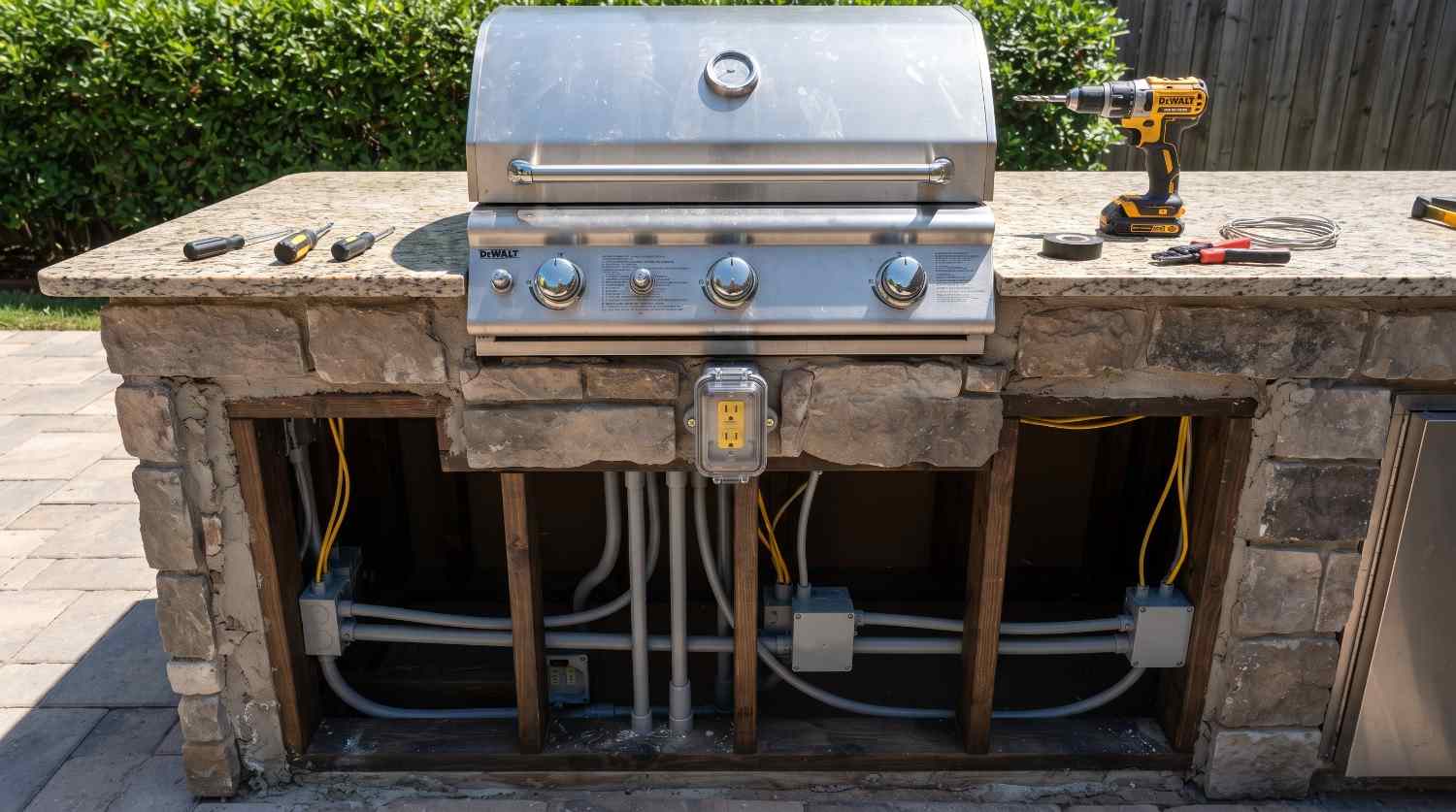
Why a split line is so expensive
The lines run inside the frame, behind the cladding. A pipe that splits in there does not announce itself. It leaks quietly into the structure and you find out in spring, when something is wet that should not be.
The repair is not the pipe. It is opening the masonry to reach it, and closing it back up again.
Timing
When should you winterize?
October, before the first sustained hard freeze rather than after the first cold night.
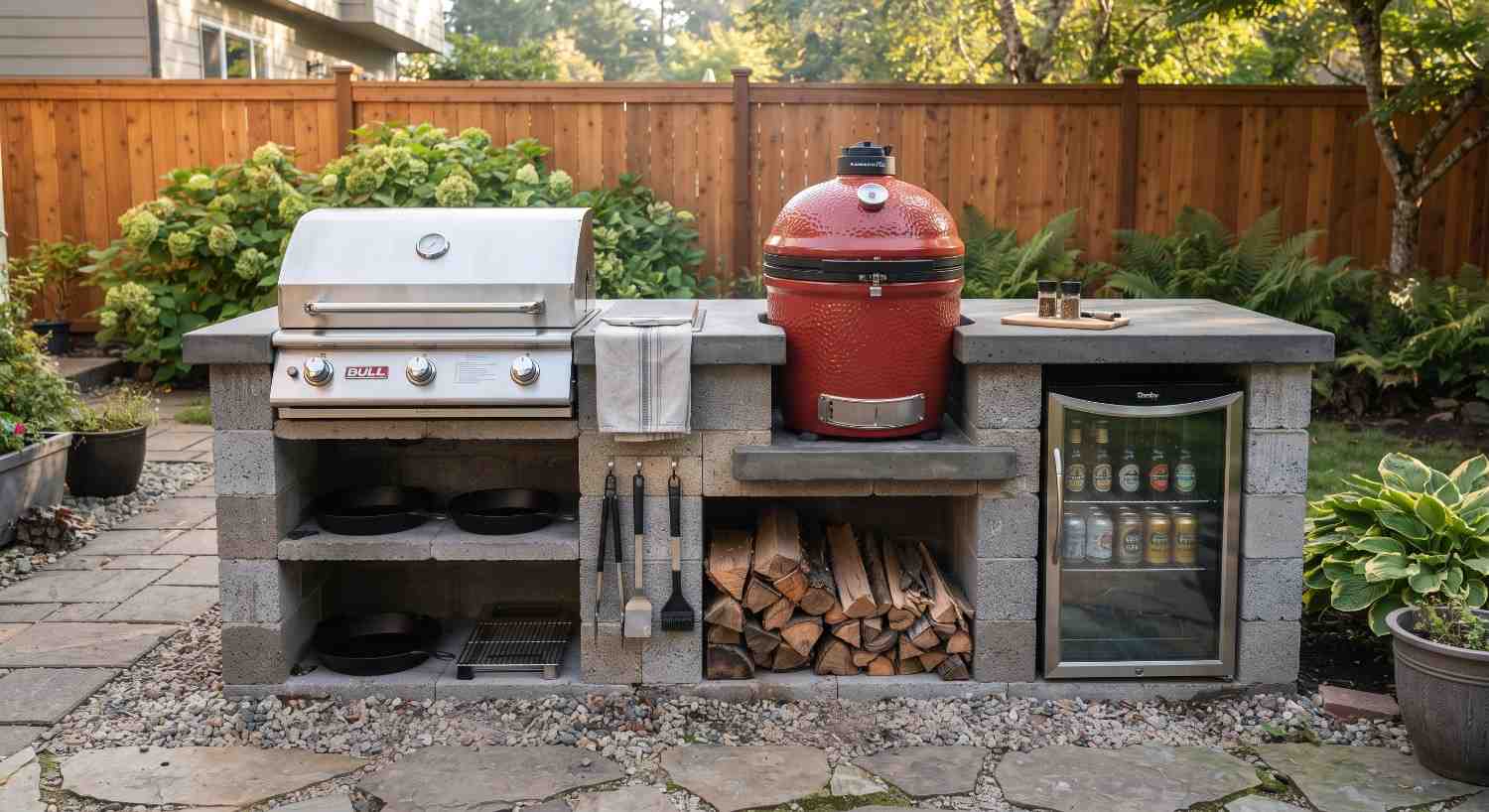
The mistake is waiting for it to feel like winter
Damage happens on the first night the water in a trap goes solid, and that comes well before the weather turns memorable.
Booked in October, this is a scheduled visit. Booked in December, it is very often already a repair.
Find out what your yard allows
We come out and tell you what you are allowed to build before anything is drawn. On site, at no cost.
Or call (208) 856-3233Skipping It
Can you skip it?
Only if there is no water in the kitchen at all, and even then the answer is not quite yes.
A kitchen with no plumbing
Far less to go wrong. No lines to split and no trap to crack. Cover the grill, clear the cabinets out, check that water can leave the frame, and it will sit out the winter.
A kitchen with a sink or a fridge line
Skipping it is gambling on the weather. The honest comparison is a short visit against opening masonry to reach a pipe, and that is the whole argument.
What We Do
What we do
Shut down in fall, opened back up in spring
Winterizing is the cheapest work we do and the work that prevents the most expensive calls we get.
- RepairsFor the kitchens that were not cleared down in time.
- Full buildsWhere the lines get run with a way to clear them designed in from the start.
- Adding a coverThe change that takes most of the weather off the run for good.
- RemodelsFixing the drainage that caused the damage while the surfaces are off anyway.
- Design and layoutPlanning a run that is quick to shut down rather than a fight every fall.
- Fire pits and fireplacesThe part of the yard that gets used through the winter rather than shut down.
Tell us whether there is a sink, a fridge or an ice maker out there. That is what decides how long the visit takes.
Freezing
Will outdoor water lines freeze at 30 degrees?
A single night at 30 rarely does it. Sustained hours below freezing will.
Water needs time as well as temperature. A brief dip just below freezing usually passes without damage, because the water in the line has not had long enough to give up its heat.
What breaks pipes is the run of cold days where it never gets back above freezing, and that is a normal winter here rather than an exceptional one. A line inside masonry is also colder for longer than the air around it, because the frame holds the cold well after the day has warmed up.
So the number that matters is not one temperature on one night. It is whether your kitchen goes into the winter with water still in it.
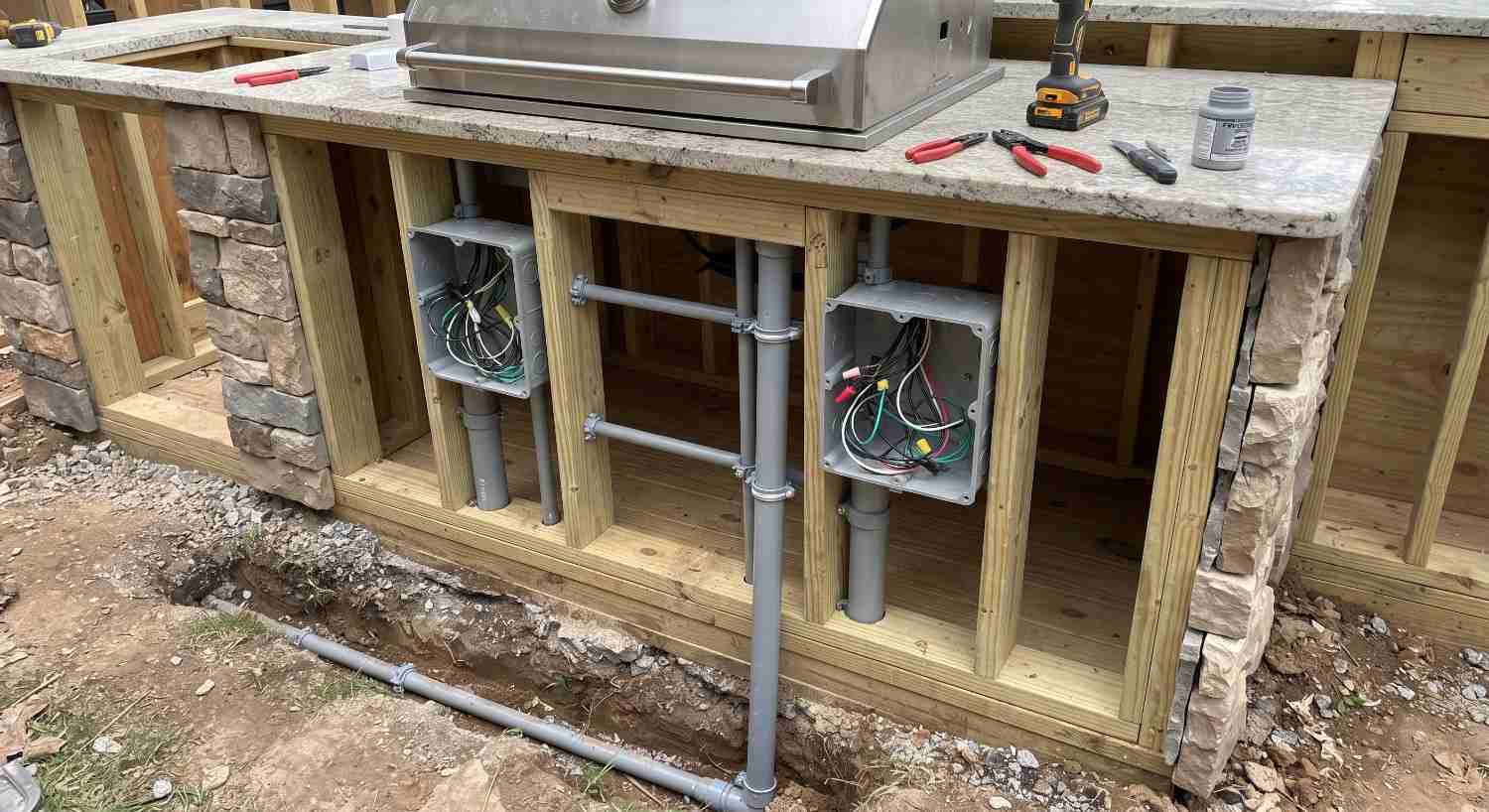
Everything that has to be emptied is in here
Once the cladding is on, none of this is reachable without taking a section apart.
That is the whole reason the fall visit is cheap and the spring repair is not.
Drains
Where does the sink drain?
Into the house drain, into a dry well, or into a soakaway, and which one you have changes the job.
| Where it goes | What that means in winter |
|---|---|
| Back to the house drain | The simplest to clear and the least likely to freeze, because the run slopes back toward somewhere warm. |
| A dry well | Takes the water away locally, and holds more of it out in the cold. Worth clearing properly. |
| A soakaway | Same again, and the one most likely to hold standing water right through a freeze. |
Whichever you have, the trap is the weak point. It exists to hold water, so it is the first thing emptied on every visit.
Common Questions
Common questions
Yes, and a cold climate is a better place for one than people assume. Built properly, with footings deep enough to sit still and water that can be cleared out, the winter is a season it sits through rather than a problem. What fails is a kitchen built for a mild climate and left full of water.
An hour or two on most kitchens. Longer where there is refrigeration, an ice maker, or a drain that needs real clearing. We tell you which yours is before booking rather than after arriving.
Yes, and it is the better time to find a problem. Lines back on and pressure tested, gas checked, appliances cleaned and relit. Anything that did not survive the winter turns up then rather than in the middle of the first weekend you wanted to use it.
Most of it, yes. Clear the cabinets, cover the grill, isolate the gas. The part worth having done is the water: getting every line and the trap genuinely empty, rather than mostly empty, is the difference between a kitchen that sat out the winter and one that split behind the cladding.
Call before you turn the water back on. A split line inside a frame does not show itself until it is under pressure, and running it to find out is how a small repair becomes a wet structure. We can check it dry.
No. A roof keeps the snow off, it does not keep the pipes above freezing. A covered kitchen is easier to work on and ages far more slowly, but the water still has to come out of the lines.
Get a price for your build
One call, one visit, and a quote that names what it covers.
Or call (208) 856-3233Next Step
How do you book it?
One call in the fall. We clear the lines, shut down the appliances, check the drainage and leave it ready for winter.
If something has already failed, start at outdoor kitchen repair. If the run is hard to shut down every year because of how it was built, that is worth fixing during a remodel.
Get a quote for your outdoor kitchen
We measure the space, tell you what your yard allows, and build it so nothing shifts on you in winter. One visit, and a quote that names what it covers.
Book a Winterization Visit