Fire Features
Fire Pits and Outdoor Fireplaces
The cheapest way to get more months out of your yard. A pit is the simple version, a fireplace the serious one, and we put it where the smoke does not blow at your seats.
10 years building in Meridian
70+ outdoor kitchens completed
RCE-69511 Idaho registration
Reviewed by Janine Burrows Outdoor Kitchen Designer and Erica Jensen Office Manager, Outdoor Kitchen & Patio Last checked September 2026
The cheapest way to get more months out of your yard. A fire pit is the simple version, a built-in fireplace the serious one, and we put it where the smoke does not blow straight at your seats.
If you are comparing portable fire bowls, this is not that page. This is a built fire feature on its own footings.
The Choice
Fire pit or outdoor fireplace?
A fire pit is social. A fireplace is architectural. They solve different problems and they cost very different money.
The test that decides it
If you want everyone facing each other, build a pit. If you want the yard to have a wall, a backdrop and heat pointed at the seating, build a fireplace.
A pit suits an open yard and it is the cheaper build by a wide margin. A fireplace is a masonry structure with a flue, and it costs several times what a pit does for that reason.
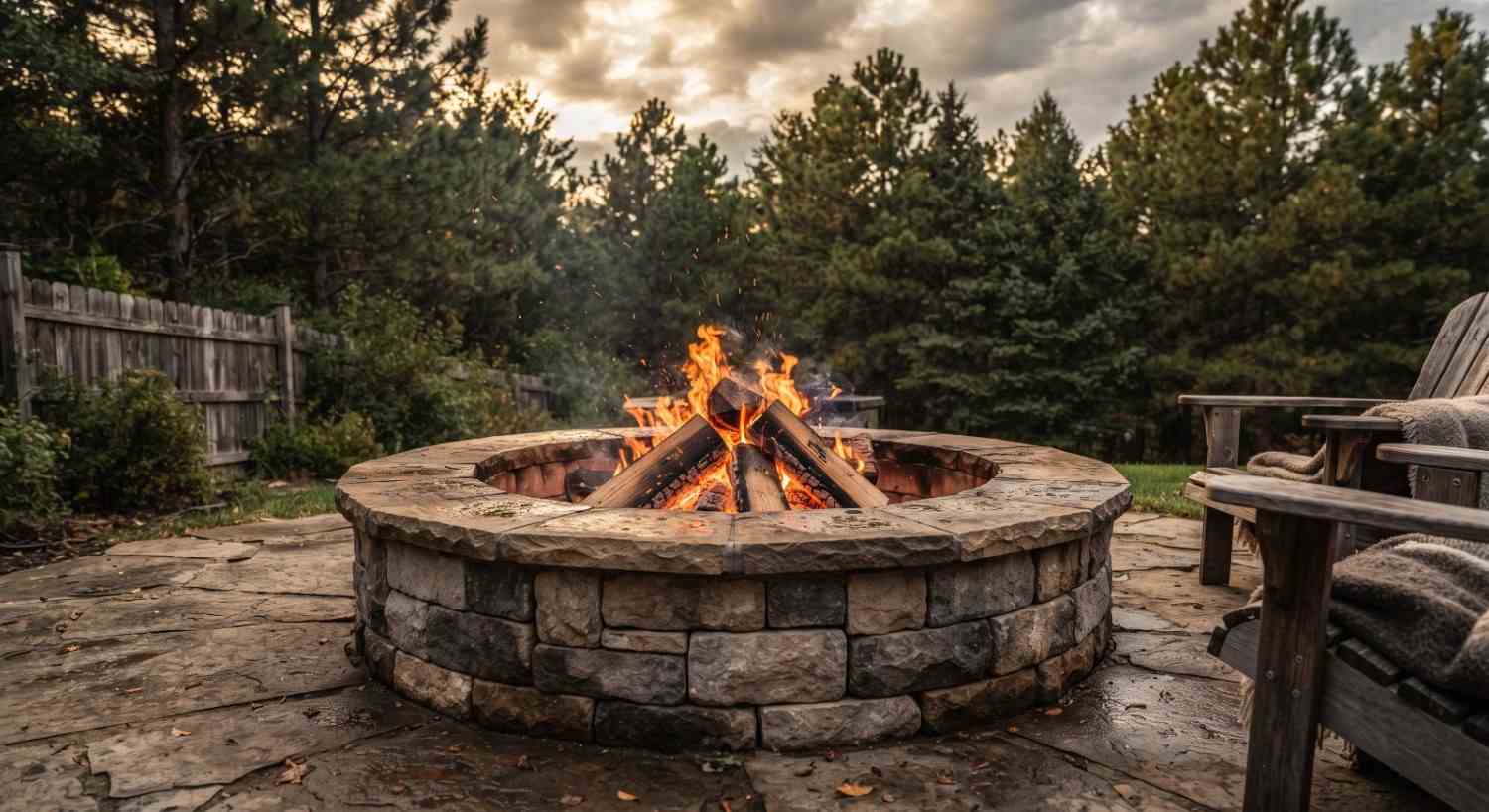
Fire pit
Sits low, people ring it, everybody sees each other across the flame. The cheaper build, quicker to put in, and probably what you mean when you say fire feature.
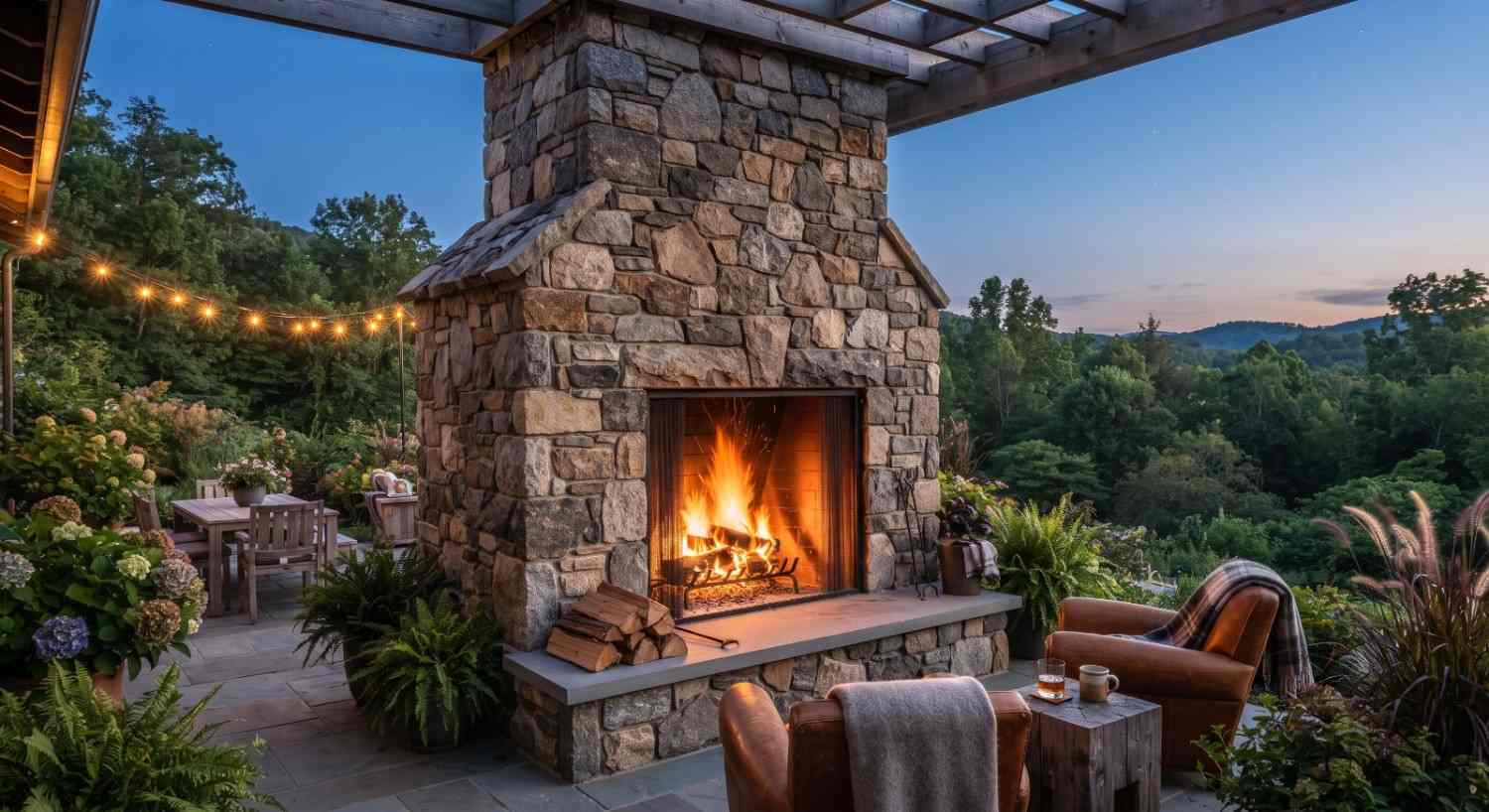
Outdoor fireplace
A vertical structure with a firebox and a chimney. Throws heat in one direction, gives the yard a focal point and a wind break, and reads as part of the house rather than an object in the grass.
Warmth
Do fire pits actually keep you warm?
They keep your front warm. That is the honest answer, and it changes what you should build.
Heat travels in a straight line
A fire pit warms whatever faces it and does nothing at all for your back. On an October evening that is usually enough. In November it is not.
What actually extends the season is fire plus something that stops the wind and holds the heat: a roof overhead, a wall behind you, or a fireplace throwing heat one way rather than radiating it in every direction at once.
A fireplace set against the prevailing wind, with the seating in front of it, is noticeably warmer than a pit burning the same amount of fuel.
Find out what your yard allows
We come out and tell you what you are allowed to build before anything is drawn. On site, at no cost.
Or call (208) 856-3233Cost
What drives the cost?
Five things, and the range is wide enough that two very different quotes can both be honest.
Ask any contractor to put these five on separate lines. Two estimates become comparable the moment they do.
Height and mass
A fireplace is masonry all the way up. Doubling the height more than doubles the material and the labor.
The firebox
A manufactured box clad on site, or a fully masonry firebox built in place. The single biggest fork in the price.
The chimney
Height, lining and termination. The one part that cannot be cheapened without breaking how it draws.
The footing
Tall and heavy means a bigger footing than the kitchen run needs, and the digging that goes with it.
The stone
Full bed natural stone or a thin veneer. On a tall structure with a lot of face area, that is a large swing.
Drainage
Water getting into a hearth or a firebox and freezing cracks masonry that fire alone never would.
If a quote looks high, ask which of those five it is buying. A fireplace quoted well under the others is usually a shorter chimney, a manufactured firebox or a thinner stone, and any of those can be the right answer as long as you were the one who chose it.
What We Do
What we build
Fire, and the yard around it
A fire feature is masonry on footings, so it gets built to the same standard and the same finish as the kitchen.
- Full outdoor kitchensBuilt at the same time and in the same stone, which is cheaper than two visits.
- Design and layoutWhere it goes, which way it faces, and where the smoke ends up.
- Covered kitchensA roof plus a fire is what makes a yard usable into the cold months.
- Bars and seatingThe seating that faces it, planned so nobody is sitting in the smoke.
- Pizza ovens and smokersThe other masonry appliance, often built into the same structure.
- RepairsCracked hearths, open joints and fireboxes that have taken water.
Tell us where people sit now. That is usually where the fire wants to be.
Fuel
Wood or gas?
Gas if you want it lit in ninety seconds. Wood if the fire is the point.
| Wood | Gas | |
|---|---|---|
| Lighting | Ten to twenty minutes to get going. | Immediate. |
| Heat | More of it, and it carries further. | Steady and controllable, less radiant. |
| Effort | Fuel, storage, ash, cleaning. | None. |
| Smoke | Real, and it decides where the feature can go. | None. |
| In practice | Used on occasions. | Used on weeknights. |
The pattern is the same as every other appliance out here. Gas gets used more often because nothing stands between wanting it and having it. Wood gets used less and enjoyed more. A gas line to a fire feature gets sized alongside everything else on the run rather than added to a line that was already at capacity.
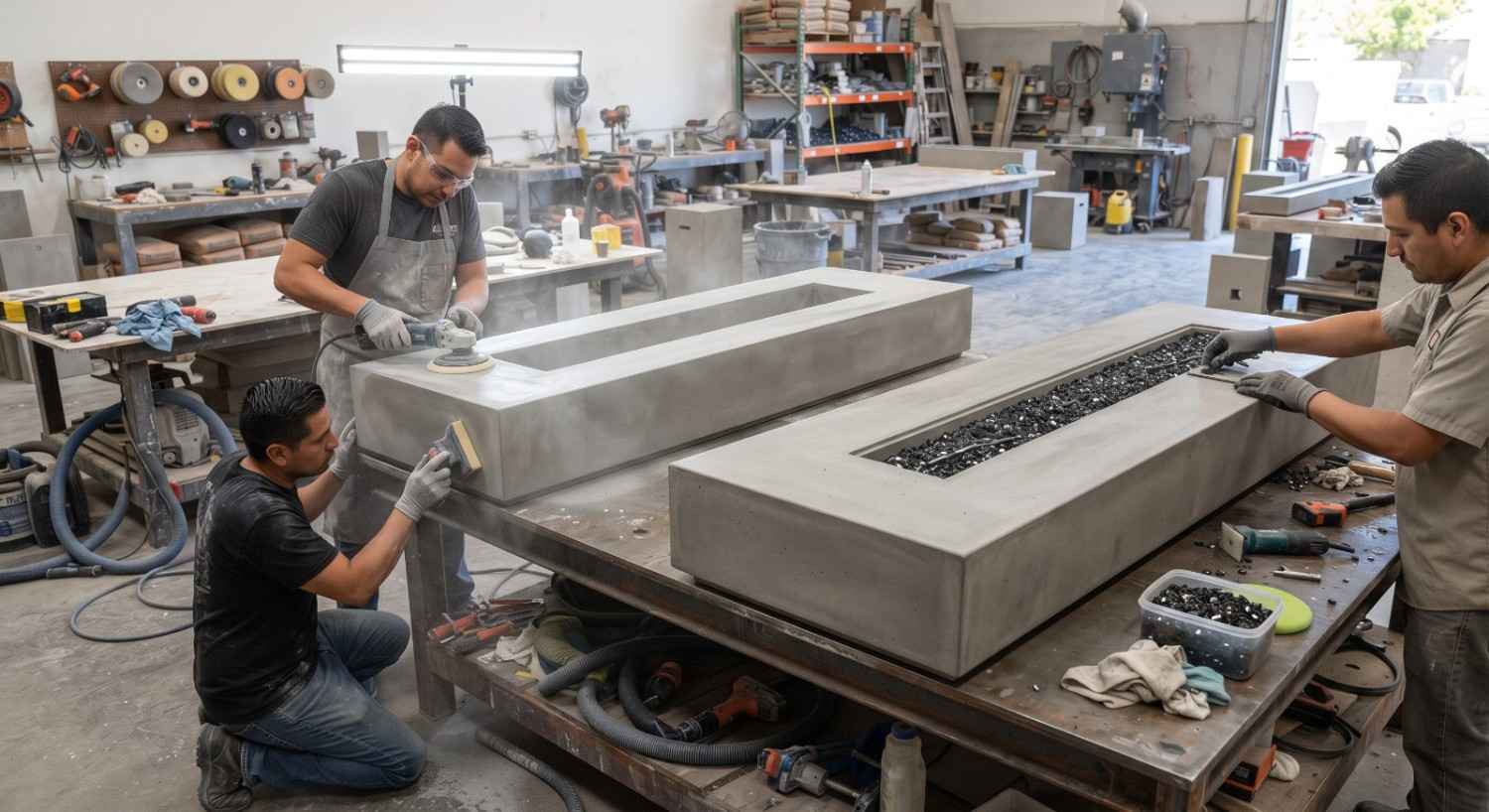
What you pay for is inside the wall
The firebox and the flue are the two parts that decide whether it draws properly, and neither is visible when it is finished.
That is why a cheaper quote is usually a shorter chimney rather than a better price.
Placement
Where should it go?
Downwind of the seating, away from the house, and far enough from anything that burns.
Smoke decides more of this than anything else. Check which way the wind usually moves across the yard before the position is fixed, because a fire pit that smokes out the patio every evening stops getting lit.
The other half is distance. A fire feature wants clear space around it, well away from fences, low branches and anything stored nearby. A fireplace against a wall needs the wall built for it rather than borrowed.
Common Questions
Common questions
A fire pit is one of the cheapest built features in a yard. A fireplace is one of the more expensive. The gap between them is bigger than most people expect, and it is entirely the chimney, the firebox and the mass of masonry holding them up. We price the five parts separately so you can see where it goes.
Often not for a simple pit, and often yes for a fireplace. A chimney is a structure, and gas work is inspected whatever it is attached to. We work out which yours is and we file what needs filing.
A fireplace can, with a properly built and terminated chimney. An open wood pit cannot. Smoke has to leave a covered space, and a pit under a roof fills it. A gas feature under a cover is a different conversation and often works.
Something that does not mind heat, sparks or being wet. Pavers, stone or concrete. Not timber decking, and not anything with a soft finish that scorches, because embers travel further than people expect.
A few days for a fire pit, one to two weeks for a fireplace. The masonry has to cure before it is lit, and rushing that is how a new firebox cracks on its first fire.
Yes, and matching the finish is the part to plan. Stone that was laid a few years ago may no longer be available, so we look at that before quoting rather than after the delivery arrives in the wrong color.
Get a price for your build
One call, one visit, and a quote that names what it covers.
Or call (208) 856-3233Next Step
How do you get a quote?
We come out, check which way the smoke will blow, and price the pit or the fireplace with the firebox, the chimney and the stone on separate lines. No charge for the visit.
If a kitchen is going in as well, both get planned together at outdoor kitchen design, and building them at the same time costs less than doing it twice. A roof over the seating is on covered outdoor kitchens.
Get a quote for your outdoor kitchen
We measure the space, tell you what your yard allows, and build it so nothing shifts on you in winter. One visit, and a quote that names what it covers.
Get a Free Site Measure