Southwest Meridian
Outdoor Kitchen Bars in Southwest Meridian
A lot of Southwest Meridian's rural acreage supports more than just a house, chickens, horses, a small barn, or a pasture are common enough on the west side of Ten Mile Road that they're worth factoring into where an...
10 years building in Meridian
70+ outdoor kitchens completed
RCE-69511 Idaho registration
Reviewed by Janine Burrows Outdoor Kitchen Designer and Erica Jensen Office Manager, Outdoor Kitchen & Patio
On a standard lot east of Ten Mile Road, a bar’s placement mostly comes down to patio space and traffic flow. On acreage to the west, if the property includes chickens, horses, or any small livestock setup, prevailing wind direction relative to that area becomes a real factor too, since nobody wants a beverage counter sitting downwind of a barn on a warm afternoon.
That’s not a reason to avoid a bar on a working or hobby homestead property. It just means placement benefits from thinking through wind patterns and distance the same way you’d think through sun exposure or utility access.
Local Planning
What Outdoor Kitchen Bars Look Like in Southwest Meridian
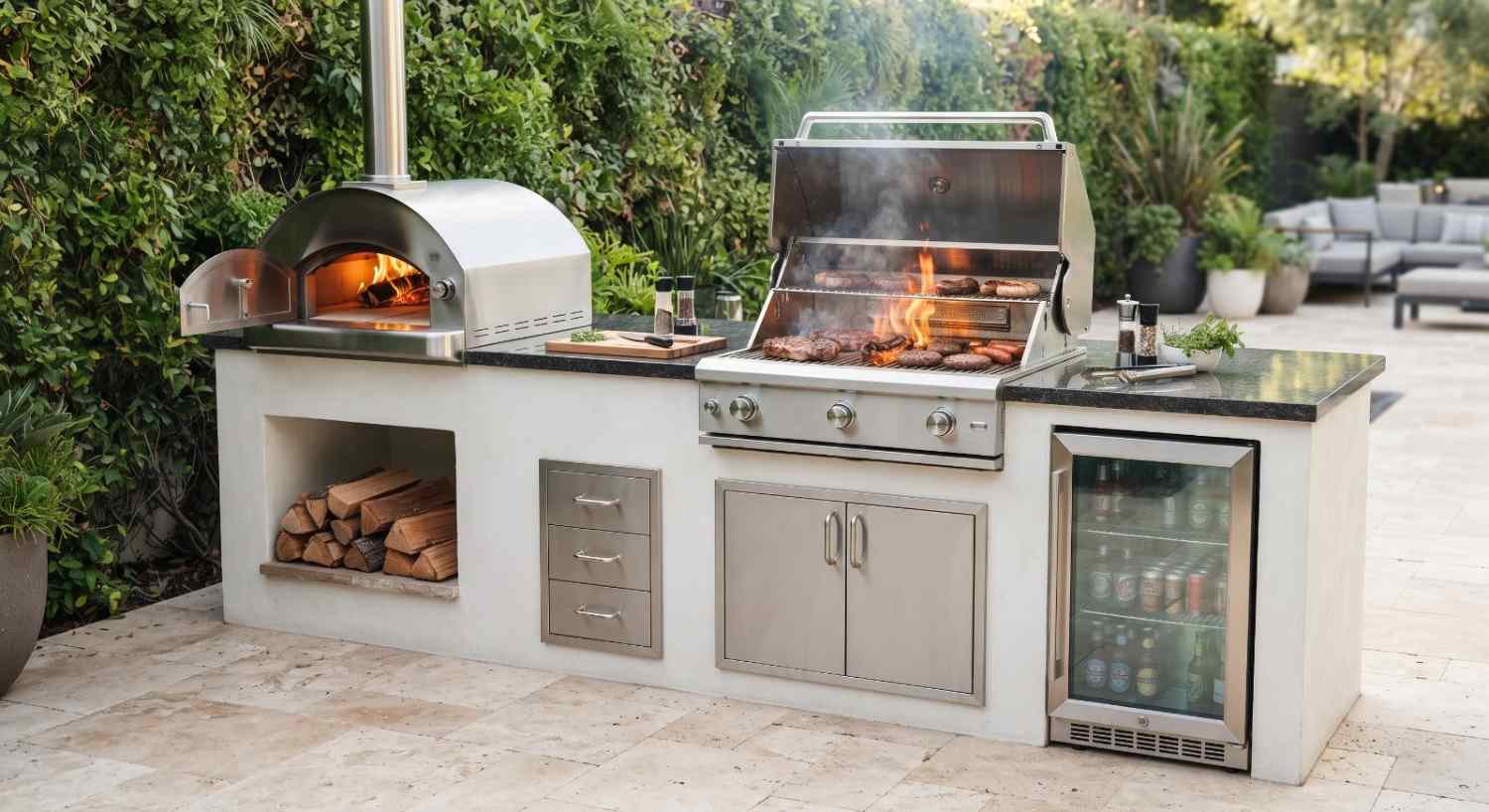
An outdoor kitchen bar typically centers on a counter with seating on at least one side, paired with refrigeration, ice storage, and sometimes a kegerator or built-in beverage taps. On a property with animals somewhere on the acreage, siting that bar upwind, or simply at a comfortable distance, from any barn, coop, or pasture area makes a real difference in how much the space actually gets used and enjoyed.
Most rural lots here offer plenty of room to make that choice easily, since there’s rarely a shortage of open ground the way there might be on a tighter standard lot. The planning question isn’t whether there’s space, it’s choosing the right spot within that space.
Regional Considerations
Building a Bar for Idaho’s Seasons
A bar has the same foundation requirements as any other outdoor structure in this climate. Meridian’s freeze/thaw cycles and minimum footing depth apply the same way on rural acreage as they would on a standard subdivision lot, regardless of what else the property is used for.
On a well-served property, refrigeration and ice-making components draw from the same water source as the rest of the household, which is worth factoring into the fixture list the same way it would for a full kitchen island. Winterizing those components, along with any nearby well piping, follows the same seasonal logic as the rest of the property.
Wind direction relative to your animals matters more than you'd think for a bar. Let's find the spot that actually works.
Get a Free Site MeasureFind out what your yard allows
We come out and tell you what you are allowed to build before anything is drawn. On site, at no cost.
Or call (208) 856-3233What's Included
What an Outdoor Kitchen Bar Can Include
Bar Seating
Counter-height or bar-height seating, with overhang depth and stool spacing planned for comfort.
Refrigeration
Beverage-specific fridges or drawer units, drawing from your property’s existing water source if applicable.
Kegerator or Beverage Taps
Built-in draft systems for a more finished, functional setup.
Ice Storage
Dedicated ice bins or makers to keep drink prep close to the serving counter.
Sink and Drainage
Simpler than a full kitchen’s needs, though drainage routing should account for well and septic layout on rural properties.
Standalone Bar vs. Bar Extension
Standalone Bar or Extension of Your Kitchen?
Standalone Bar
Practical here given how much open ground most rural properties offer, with real freedom to site it away from any animal areas.
Bar Extension
Still a reasonable choice if consolidating utilities with an existing kitchen matters more than maximizing distance from a barn or coop.
Seating Orientation
Facing the open property or a view, since acreage often has more to look at than a standard subdivision lot.
Wind Direction
Worth mapping relative to any livestock area before finalizing placement.
Distance from Animal Areas
A comfortable buffer improves the bar’s actual usability on warm days.
Explore Outdoor Kitchen Islands
Standalone or shared with the kitchen, wind and distance from your animals should guide the decision. Let's map it out.
Get a Free Site MeasureBar Planning
Planning the Bar Around Your Southwest Meridian Property
The starting point on a property with livestock or animal areas is understanding prevailing wind direction and choosing a bar location that sits comfortably clear of it. On a standard lot without that consideration, planning moves straight to footprint and traffic flow.
From there, seating and refrigeration get scoped to how you actually entertain, with utility connections planned around whatever water and drainage setup your specific property has.
Process
From Idea to Outdoor Kitchen Bar
Map Wind Direction and Animal Areas
If applicable, confirm prevailing wind relative to any barn, coop, or pasture.
Choose a Site
Select a location with comfortable distance and favorable wind orientation.
Plan Seating
Work out counter height, overhang, and stool spacing for how many guests you typically host.
Select Refrigeration and Storage
Choose beverage fridges and ice storage, considering your property’s water source.
Route Utilities
Plan electrical, water, and drainage connections appropriate to your well/septic or city utility setup.
Local Area Context
Outdoor Kitchen Bars Across Southwest Meridian
West of Ten Mile Road, a real number of rural acreage properties include some form of animal keeping, chickens, horses, or a small pasture, which makes wind direction and distance a genuine siting factor for a bar in a way a standard subdivision lot east of the road never has to consider. Most of these same properties offer generous open space to make that placement decision comfortably.
The right layout still comes from your specific property’s actual setup, not a standard bar placement applied across the area.
Recent Work
Recent work
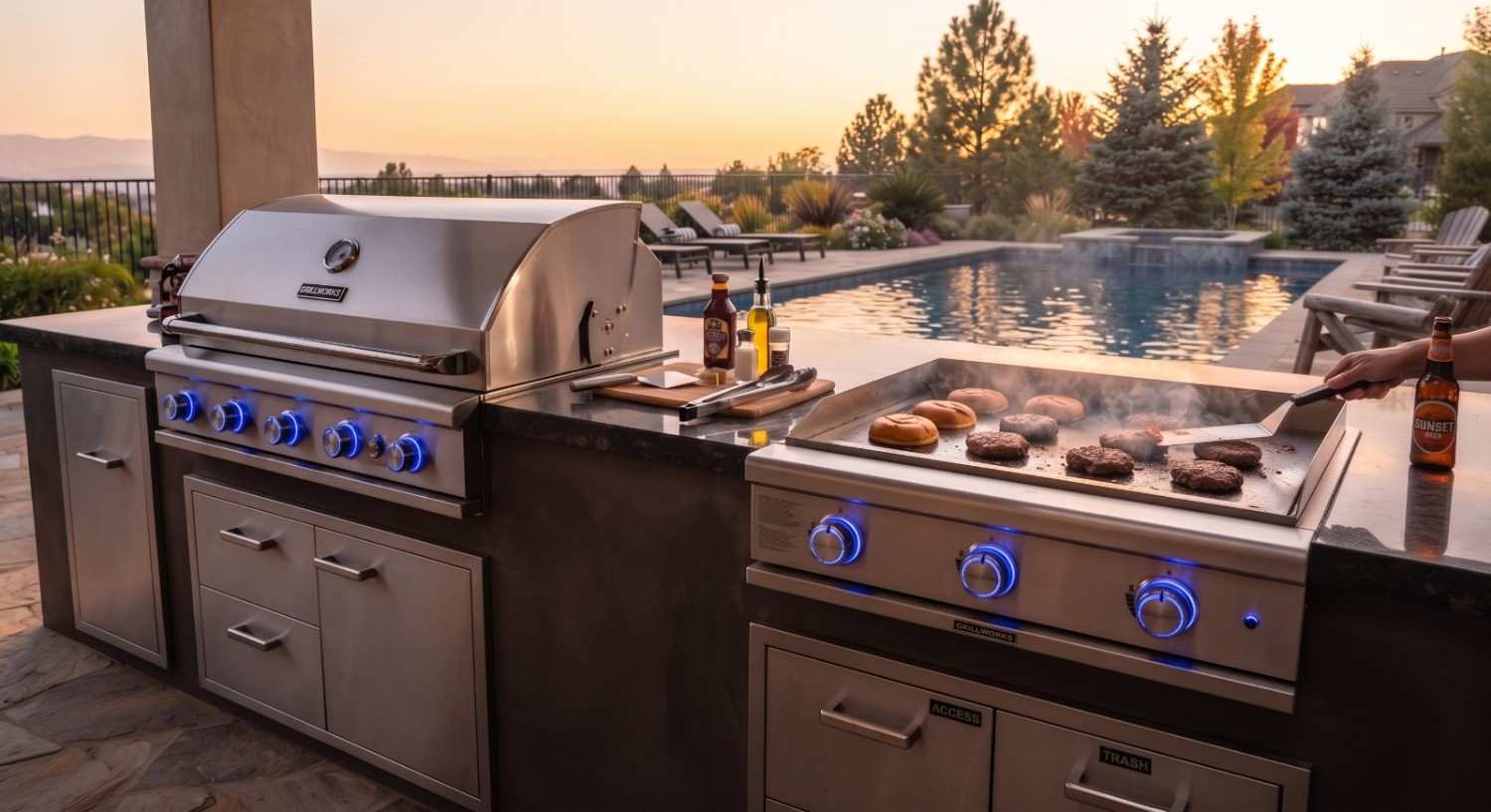
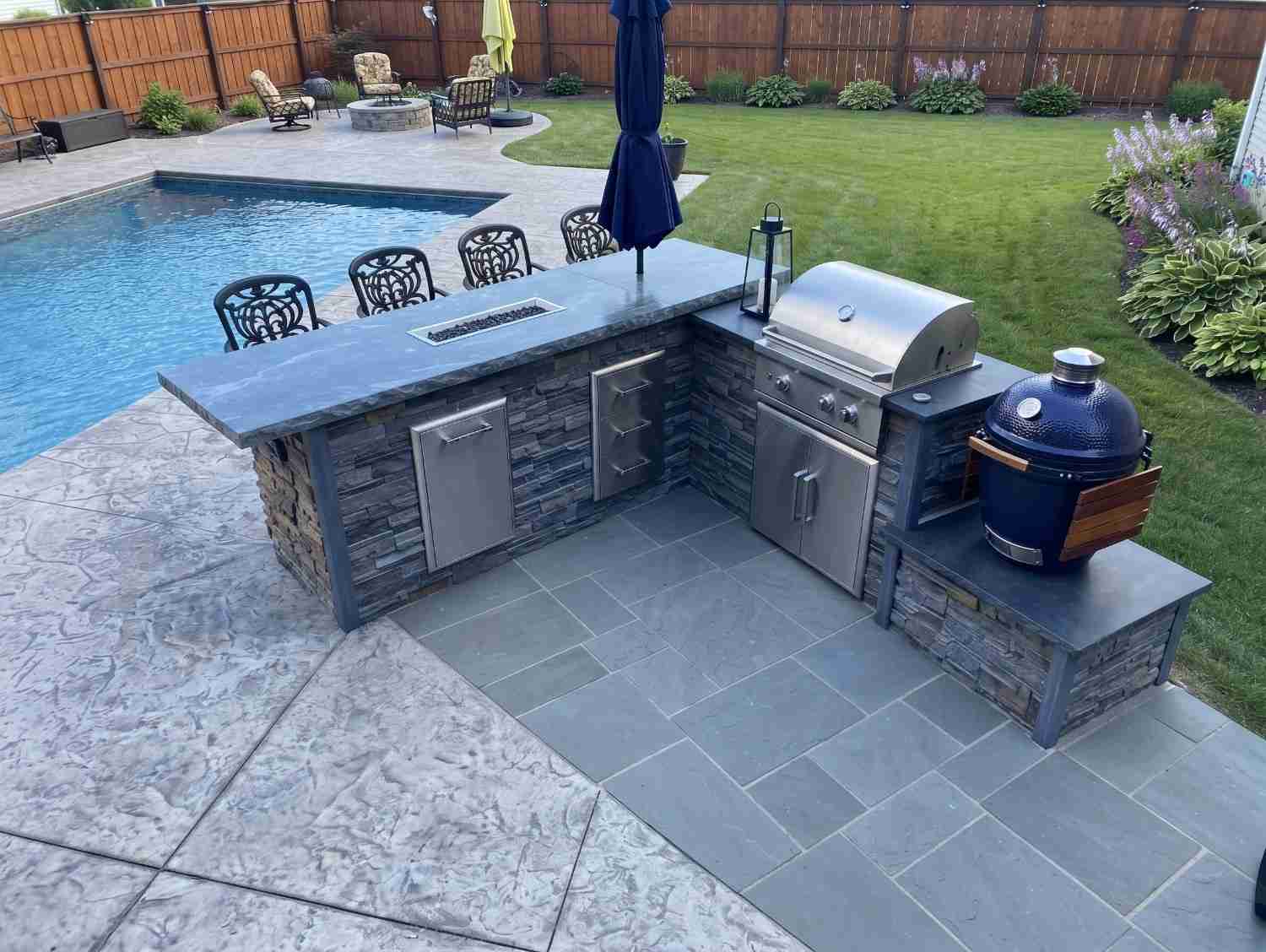
Our own work, photographed on site.

Approach
Which approach fits your space?
Outdoor Kitchen Islands
See how a bar can extend from your island layout. Explore Islands
Island Seating
Compare seating options across bar and island setups.
Covered Kitchens
Add shade or wind protection over your bar area. Explore Covered Kitchens
Outdoor Kitchen Construction
Best when planning a bar as part of a full build. Explore Construction
Related
You may also be considering
Have Animals on the Property? Let's Site Your Bar the Smart Way.
Start with wind direction and distance. We'll help you find a spot that actually stays pleasant to use.
Or call (208) 856-3233Common Questions
Frequently asked questions
Cost depends on size, seating, refrigeration and kegerator choices, countertop material, and utility work required, including any well or septic considerations on rural acreage. Since this varies by project, it’s best discussed directly for your specific plans.
It can. Prevailing wind direction relative to a barn, coop, or pasture affects how pleasant a nearby outdoor space is to actually use, especially in warmer months.
Yes, the same as any outdoor structure in this climate. It needs a properly prepared base suited to Idaho’s freeze/thaw conditions.
Often, yes, depending on the existing footprint and utility access. A site assessment is the best way to confirm what’s possible for your specific setup.
Yes. Not all beverage refrigeration units are rated to sit through freezing temperatures without being powered down or protected, and on a well-served property, this should be coordinated with your well system’s own winterization.
It depends on how often and how many people you typically entertain, and how much of your open acreage you’d like to dedicate to the space.
Permit requirements depend on the specific scope of work, particularly for electrical, water, or structural elements. Confirm requirements for your project with the City of Meridian and, on a well and septic property, with Southwest District Health as well.
Usually, yes. Most rural properties offer enough open space to support a standalone bar sited well away from any animal areas.
Explore Outdoor Kitchen Bars across Meridian
Ready to Build a Bar That Actually Stays Pleasant to Use?
Every acreage property has a smart spot for this. Let's find yours.
Get a Free Site Measure