Pizza Ovens and Smokers
Built-In Pizza Ovens and Smokers
Wood-fired or gas, built straight into the run. Heavy, and they get hot, so they are planned in from the footings up rather than added later.
10 years building in Meridian
70+ outdoor kitchens completed
RCE-69511 Idaho registration
Reviewed by Janine Burrows Outdoor Kitchen Designer and Erica Jensen Office Manager, Outdoor Kitchen & Patio Last checked September 2026
Wood-fired or gas, built straight into the run. These are heavy and they get hot, so they have to be planned in from the start. Added later, it usually means rebuilding that section.
If you are choosing between countertop ovens, this is not that page. Those are appliances you buy and put down. This is an oven built into an outdoor kitchen, which is a structure.
The Case
Is a built-in pizza oven worth it?
Build one in if you already know you use a portable oven. Buy the portable first if you are guessing.
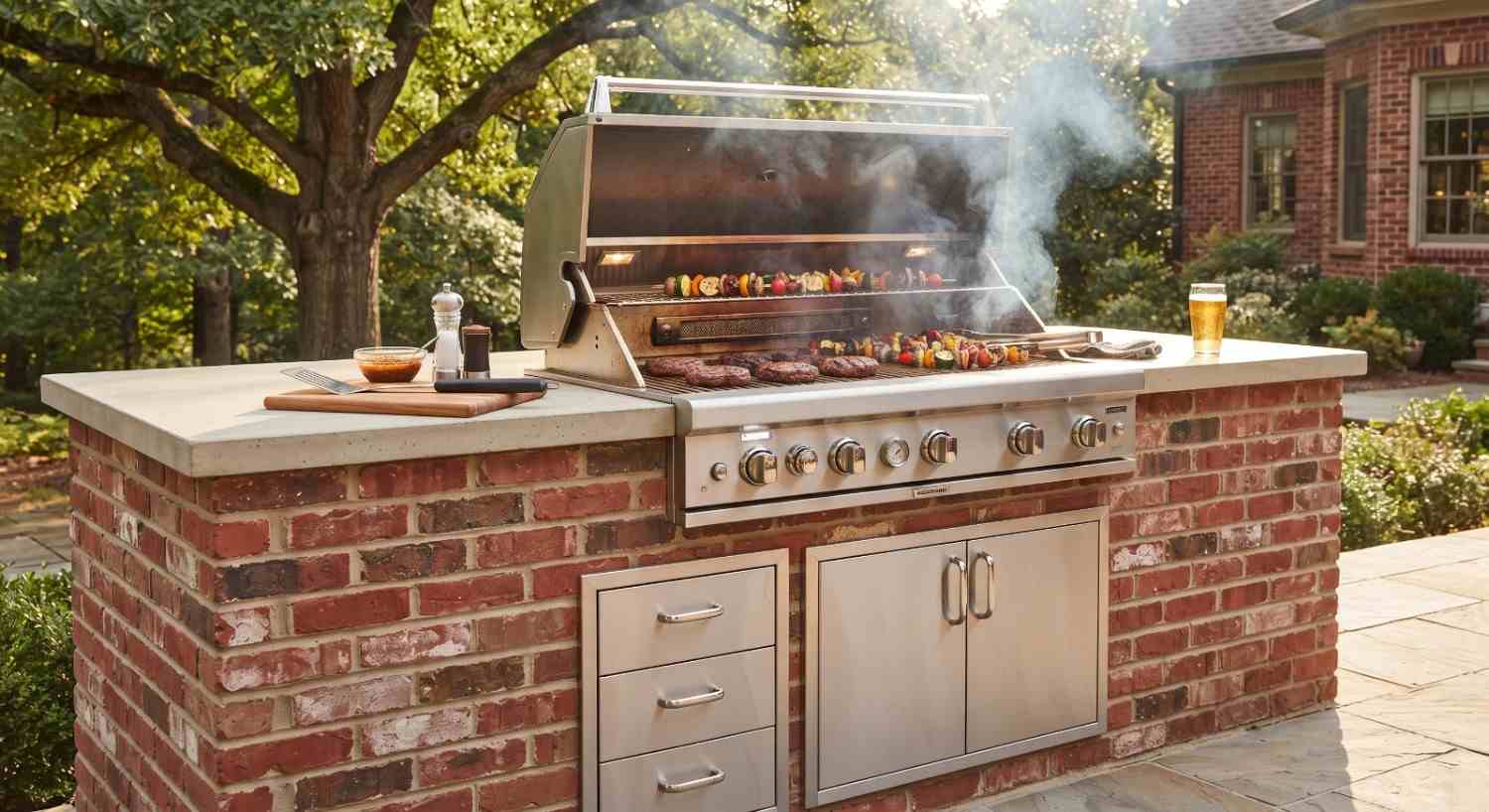
The honest warning first
A built-in costs several times what a countertop oven does, and it cannot be moved or sold on. A built-in you use twice a year is the most expensive ornament in the yard.
We would rather size your kitchen for a bigger grill and leave the oven out than build you one you walk past.
What a built-in earns its place on is three things. It holds heat far longer, so you cook for a crowd rather than one pizza at a time. It does not have to be carried out and set up every time. And it is part of the kitchen rather than clutter sitting on top of it.
Portable or Built In
Portable, or build one in?
This is the most useful question on the page and almost nobody in the trade asks it out loud.
Buy the portable
A fraction of the cost, no structure needed, and it can be put away. If pizza is something you might do a few times a summer, this is the right answer and we will tell you so.
Build one in
It holds heat for a long session, it is always ready, and it looks like part of the kitchen rather than a machine on the counter. Right when you already know you use one.
Find out what your yard allows
We come out and tell you what you are allowed to build before anything is drawn. On site, at no cost.
Or call (208) 856-3233Structure
What does a built-in oven need?
A footing under it, a frame rated for the weight, and real clearance around the heat.
An oven is not an appliance you drop into a hole. It is a load the structure has to be built for.
Weight
A masonry oven runs to hundreds of pounds before any cladding goes on. It sits on block, not on steel stud.
Footings
Its own, and deep enough. An oven settling is not something you can fix from the top.
Heat clearance
Insulation between the oven and everything it touches, at the distances the core manufacturer sets.
The flue
Smoke has to leave somewhere that is not the face of whoever is cooking.
Landing space
Counter either side, because a peel needs somewhere to go the second it comes out.
Fuel storage
Dry wood storage for a wood-fired oven, built into the run rather than a pile by the fence.
The flue is the reason this decision belongs at design stage rather than halfway through. Where the flue can go decides where the oven can go, and where the oven goes changes the whole run. Under a roof it matters more again, because smoke needs a path out of a covered space.
What We Do
What we build
Ovens, smokers, and the kitchen around them
Heavy appliances get designed into the structure from the footings up, alongside everything else in the run.
- Full outdoor kitchensThe build the oven becomes part of, sized for the load from the start.
- Design and layoutWhere the oven and the flue can go, settled before anything is dug.
- Covered kitchensA roof over it, which changes how the smoke has to be handled.
- Cooking islandsThe run alongside, with landing space either side of the oven mouth.
- Bars and seatingSomewhere for people to sit while a long cook happens.
- Fire pits and fireplacesThe other fire in the yard, built to the same finish at the same time.
Tell us how often you would actually light it. That answer changes what we recommend.
Fuel
Wood-fired or gas?
Wood for the result, gas for the weeknight.
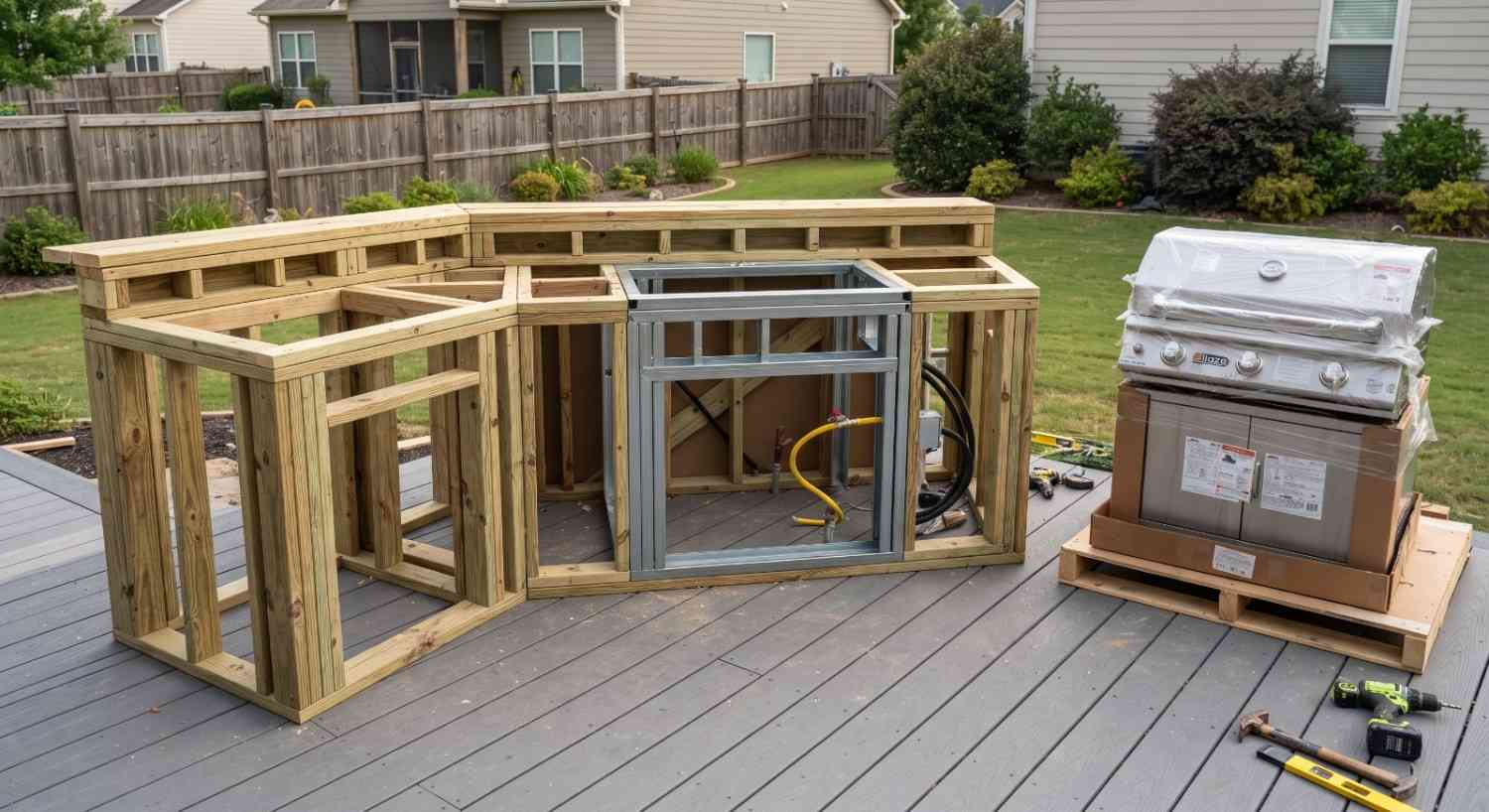
The question that actually decides it
How often will you light it on a Tuesday? If you cook pizza most weeks you will end up wanting gas or a dual fuel core. If what you want is the occasion, you want wood.
Neither is wrong. What is wrong is buying the one that matches how you imagine cooking rather than how you cook.
| Wood-fired | Gas | |
|---|---|---|
| Heat | Higher, and the flavor people build these for. | Plenty hot, and very consistent. |
| Time to ready | 45 minutes to an hour and a half. | 15 to 25 minutes. |
| Effort | Fire management, fuel storage, ash. | Turn it on. |
| Flue | Required, and it has to be sized properly. | Required, usually simpler. |
| In practice | Weekends and occasions. | Any evening. |
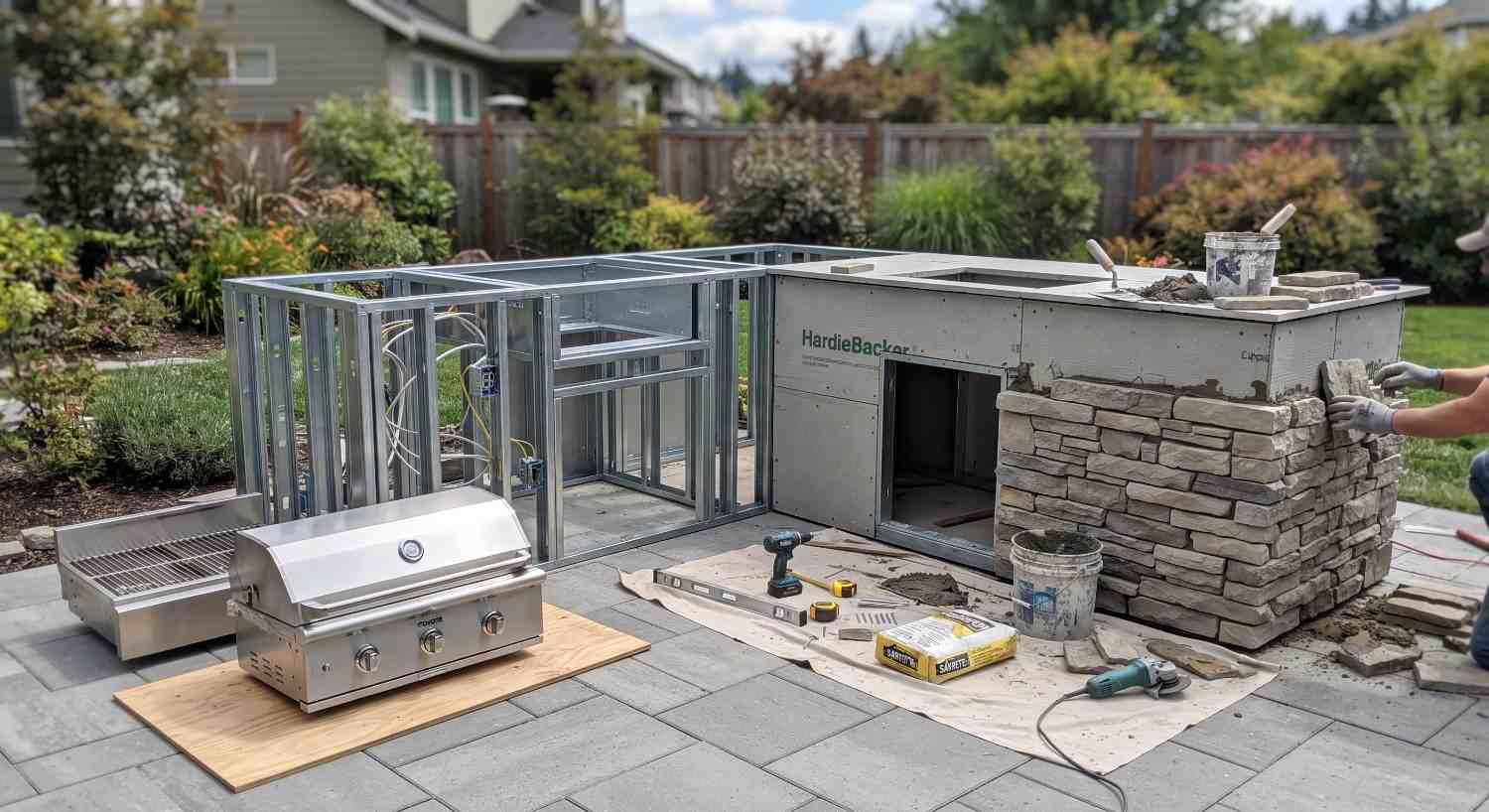
It has to be part of the structure
An oven belongs in the run the way the grill does, with counter either side and the load carried underneath it.
Bolted on at the end of a finished kitchen, it looks like what it is.
Adding One
Can you add one to an island you already have?
Sometimes, and it usually means rebuilding that section rather than dropping one in.
The frame under an existing run was sized for what was on it, and a grill module is not an oven module. Three things have to work out: whether the footing under that part is adequate, whether the frame carries the load, and whether a flue can go where the oven needs to be.
Where all three work, it is a section rebuild. Where they do not, the oven goes at the end of the run on new footings, which is cleaner and often cheaper than opening up the middle of a finished kitchen.
Smokers
What about a built-in smoker?
Different cooking, the same structural demands. Weight, sustained heat, and somewhere for smoke to go.
A smoker asks less of the peak temperature and more of the duration, so the insulation matters for hours at a time rather than minutes. It also wants to sit where a long slow cook is not blowing across the seating, because a twelve hour brisket smells wonderful for the first three hours.
Most people who want both end up with a gas oven and a separate smoker rather than one appliance trying to do the two jobs.
Common Questions
Common questions
A basic grill island runs $6,000 to $15,000 here, and a full custom build with refrigeration and a pizza oven runs $25,000 to $50,000. Where yours falls depends mostly on whether it needs a roof, how far we run gas and water, and what the ground under it is like. We give you a real number after we have seen the space.
Yes, and it needs the flue and the clearances designed in rather than worked around. Smoke has to leave a covered space, and the ceiling above the oven needs a finish that will not burn. It is very doable and it is not something to discover after the roof is on.
A manufactured core clad to match the kitchen suits most builds. It gives you a known heat performance and a known clearance requirement, and it goes in faster. A built-in-place dome is the choice when the oven is the centerpiece and you want it exactly as you want it.
It adds a week or two to a kitchen build rather than doubling it. The oven has to be set and the surround built and cured before it can be fired, and rushing the cure is how a new oven cracks.
Yes. That is the whole reason it cannot be added to an existing run casually. The load is concentrated in one place, and a footing sized for a counter is not sized for an oven.
Yes, and it is one of the few parts of an outdoor kitchen that gets better in the cold. An oven under a cover, with a fire in it, is the reason some people use their yard in November. Just keep water out of the structure the rest of the time.
Get a price for your build
One call, one visit, and a quote that names what it covers.
Or call (208) 856-3233Next Step
How do you get a quote?
We come out, work out where a flue can go, and tell you honestly whether you should build one in or buy a portable one first. No charge for the visit.
If the kitchen is not designed yet, both get planned together at outdoor kitchen design. If there is already a run in the yard, start at outdoor kitchen remodel and we will check what the frame will carry.
Get a quote for your outdoor kitchen
We measure the space, tell you what your yard allows, and build it so nothing shifts on you in winter. One visit, and a quote that names what it covers.
Get a Free Site Measure