Northwest Meridian
Built-In Pizza Ovens and Smokers in Northwest Meridian
Most fences going up in newer Northwest Meridian developments are vinyl, not wood, and that material choice matters more than homeowners usually expect once a wood-fired pizza oven or smoker enters the picture.
10 years building in Meridian
70+ outdoor kitchens completed
RCE-69511 Idaho registration
Reviewed by Janine Burrows Outdoor Kitchen Designer and Erica Jensen Office Manager, Outdoor Kitchen & Patio
Vinyl fencing has become the standard across most newer Meridian developments, prized for low maintenance and a clean, uniform look across an entire subdivision phase. It’s a fine material for its intended purpose, but it isn’t rated to handle sustained radiant heat the way wood is, which means a wood-fired pizza oven placed too close to a vinyl fence line risks warping or discoloring the panel over time, even without an open flame ever touching it directly.
On a wide-open Northwest Meridian lot, there’s usually plenty of room to place the oven with real clearance from the fence, but that only happens if it’s planned deliberately rather than assumed.
Local Planning
What Built-In Pizza Ovens and Smokers Look Like in Northwest Meridian
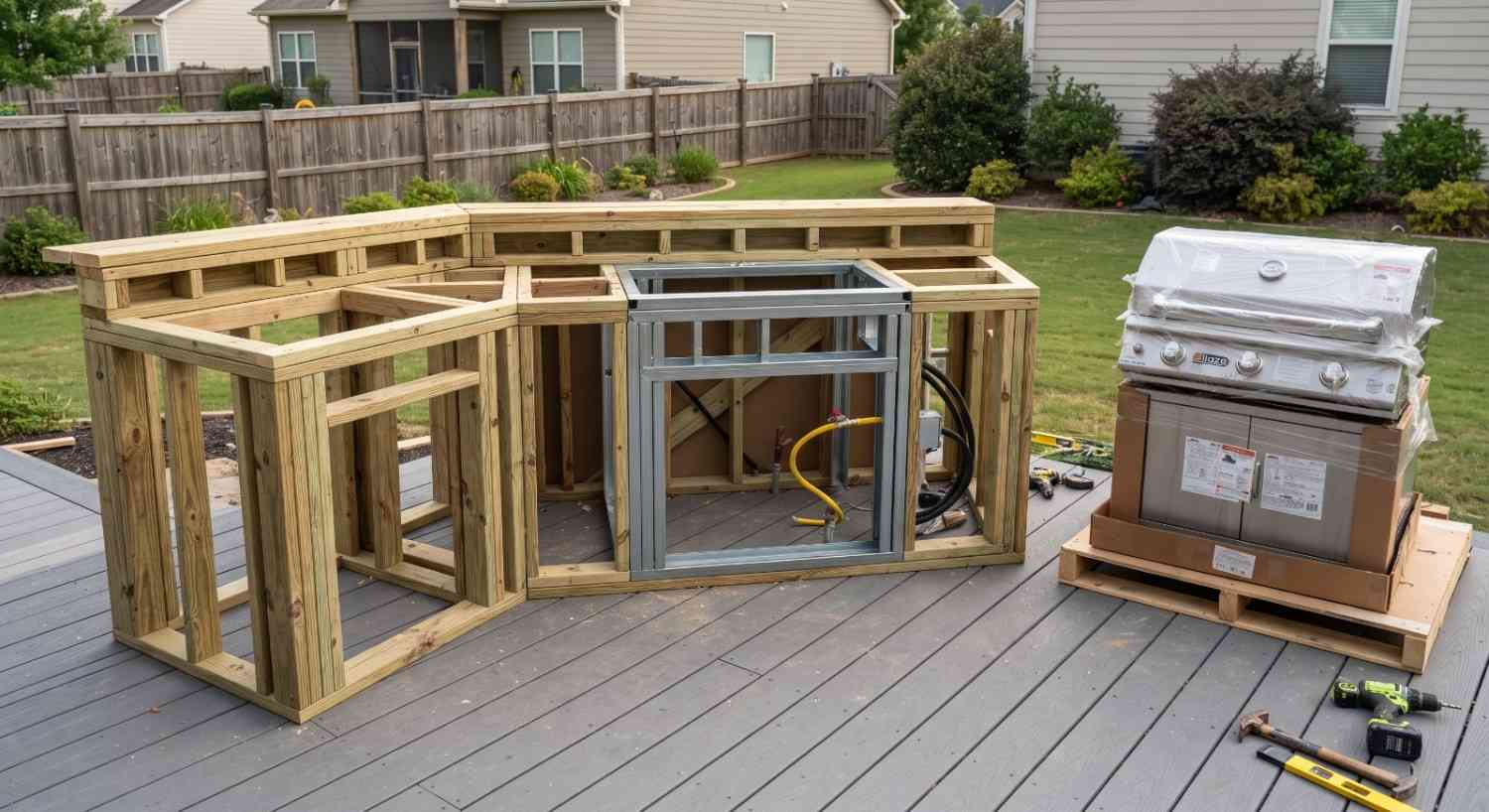
A built-in pizza oven typically runs on wood, gas, or a combination of both, and that choice affects everything from venting requirements to how much clearance it needs from combustible or heat-sensitive materials. Wood-fired units run hotter and for longer stretches than a gas unit typically would, which makes vinyl fence clearance a bigger factor for a wood-fired oven than a gas one on a lot where vinyl is the default fencing material.
Beyond the fence line, most of these lots also have young landscaping, fresh mulch beds and newly planted shrubs closer to the ground than an established yard’s more mature plantings. That’s worth factoring into placement too, since dry mulch sits closer to a heat source than a well-established garden bed typically would.
Smokers carry a related but distinct clearance question. They don’t reach the same peak temperatures as a wood-fired oven, but they run for much longer stretches at a time, which means sustained, lower-grade heat and smoke exposure near a vinyl fence line or fresh landscaping bed over several hours, not just a short burn.
Regional Considerations
Built-In Ovens and Smokers in Idaho’s Climate
A masonry pizza oven is a substantial structure, and like any built-in element in this climate, it depends on a footing set below the frost line, regardless of how new the surrounding development is. Meridian’s freeze/thaw cycles can move a foundation that wasn’t built to the right depth, and a shifting base under a heavy masonry oven tends to show up as cracking in the dome or surrounding structure.
On a recently graded Northwest Meridian lot, it’s worth confirming the fill soil beneath the intended footing has settled adequately, the same consideration that applies to any heavy structure going into ground that hasn’t had years to stabilize on its own. A smoker’s smaller footprint generally means a lighter foundation requirement, but the same fill-soil check still applies if it’s a larger built-in unit rather than a freestanding one.
Vinyl fencing and radiant heat don't mix well up close. Let's plan clearance that actually protects your fence line.
Get a Free Site MeasureFind out what your yard allows
We come out and tell you what you are allowed to build before anything is drawn. On site, at no cost.
Or call (208) 856-3233Fuel Options
Wood, Gas, or Both?
Neither fuel type is universally better, the right choice depends on the experience you want and how much clearance your fence line and landscaping can offer.
Wood-Fired
Traditional flavor and high heat, but runs hotter for longer, which matters more when a vinyl fence sits nearby.
Gas-Fired
More consistent temperature control and generally lower sustained heat output, often the more forgiving choice near vinyl fencing or young landscaping.
Dual-Fuel
Some units offer both options, adding flexibility at the cost of a more complex installation.
Smoker Fuel Types
Wood, charcoal, pellet, and electric smokers each have different insulation, airflow, and clearance needs, with electric and pellet options generally producing the least heat spillover near a vinyl fence.
Placement and Clearance
Placement and Clearance Considerations
Distance from Vinyl Fencing
Vinyl softens and warps at lower heat thresholds than wood fencing, which is worth accounting for specifically here.
Distance from Fresh Landscaping
Young mulch beds and newly planted shrubs sit closer to a heat source than mature landscaping typically would.
Ventilation Path
Smoke and heat need a clear path away from seating areas and neighboring yards.
Footprint
Masonry pizza ovens require more dedicated space than a compact smoker, though most open lots here have room to spare.
Relation to the Cook Line
Often works best with some separation from the main grill and prep area.
Explore Covered Outdoor Kitchens
Not sure how far your oven or smoker needs to sit from a vinyl fence? Let's walk the space together.
Get a Free Site MeasureInstallation Planning
Planning the Installation Around Your Northwest Meridian Property
Placement starts with confirming what your fence is actually made of and how close the intended oven or smoker location sits to it, since vinyl’s heat tolerance is meaningfully lower than the wood fencing found on older properties elsewhere in Meridian. From there, it’s a matter of confirming fuel type and venting path, using the real freedom most open Northwest Meridian lots offer to keep the structure a comfortable distance from both the fence and any young landscaping nearby.
Foundation work follows the same standards as the rest of the kitchen, built to handle Idaho’s freeze/thaw conditions and account for how recently the lot’s fill soil was compacted.
Process
From Idea to Built-In Installation
Confirm Fence Material and Distance
Verify whether your fencing is vinyl and measure clearance from the intended oven or smoker location.
Choose Fuel Type
Decide between wood, gas, or dual-fuel, weighing sustained heat output against nearby fencing and landscaping.
Plan the Foundation
Build a base suited to the unit’s weight, accounting for Idaho’s frost line and the lot’s fill soil condition.
Install Venting
Route flue or ventilation properly for safe, effective smoke and heat management.
Integrate with the Kitchen
Position the unit relative to the cook line, seating, and overall layout with real clearance built in.
Local Area Context
Pizza Ovens and Smokers Across Northwest Meridian
Vinyl fencing is the near-universal standard across developments like Paramount, BridgeTower West, and Sawtooth Creek, which makes heat clearance planning a genuinely area-specific consideration here in a way it isn’t on an older property with traditional wood fencing. Combined with young, still-establishing landscaping common on these lots, placement deserves real attention even though most of these yards offer plenty of open space to work with.
The right placement still comes from walking your specific yard and confirming your fence’s actual material, not an assumption based on the development in general.
Recent Work
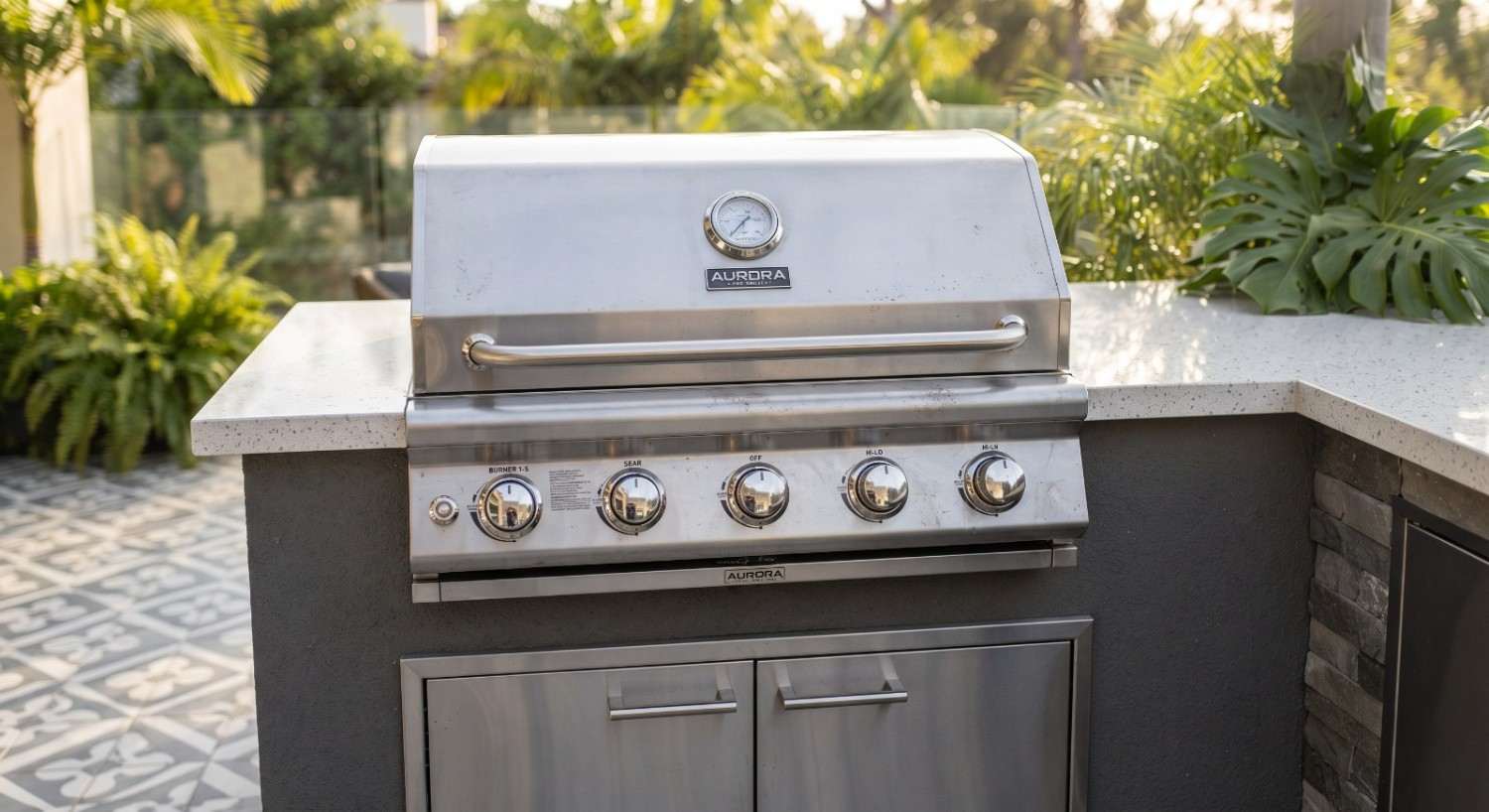
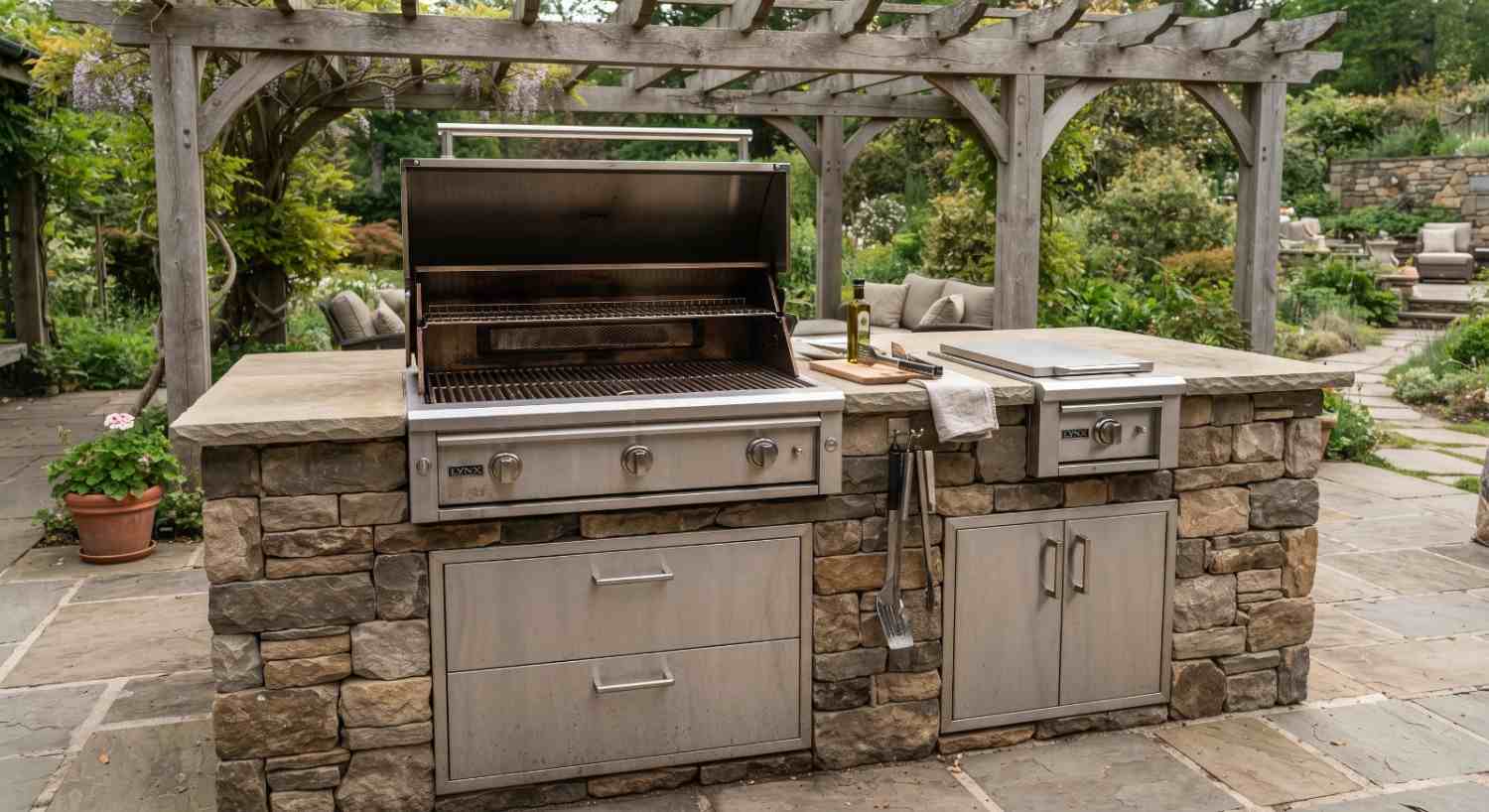
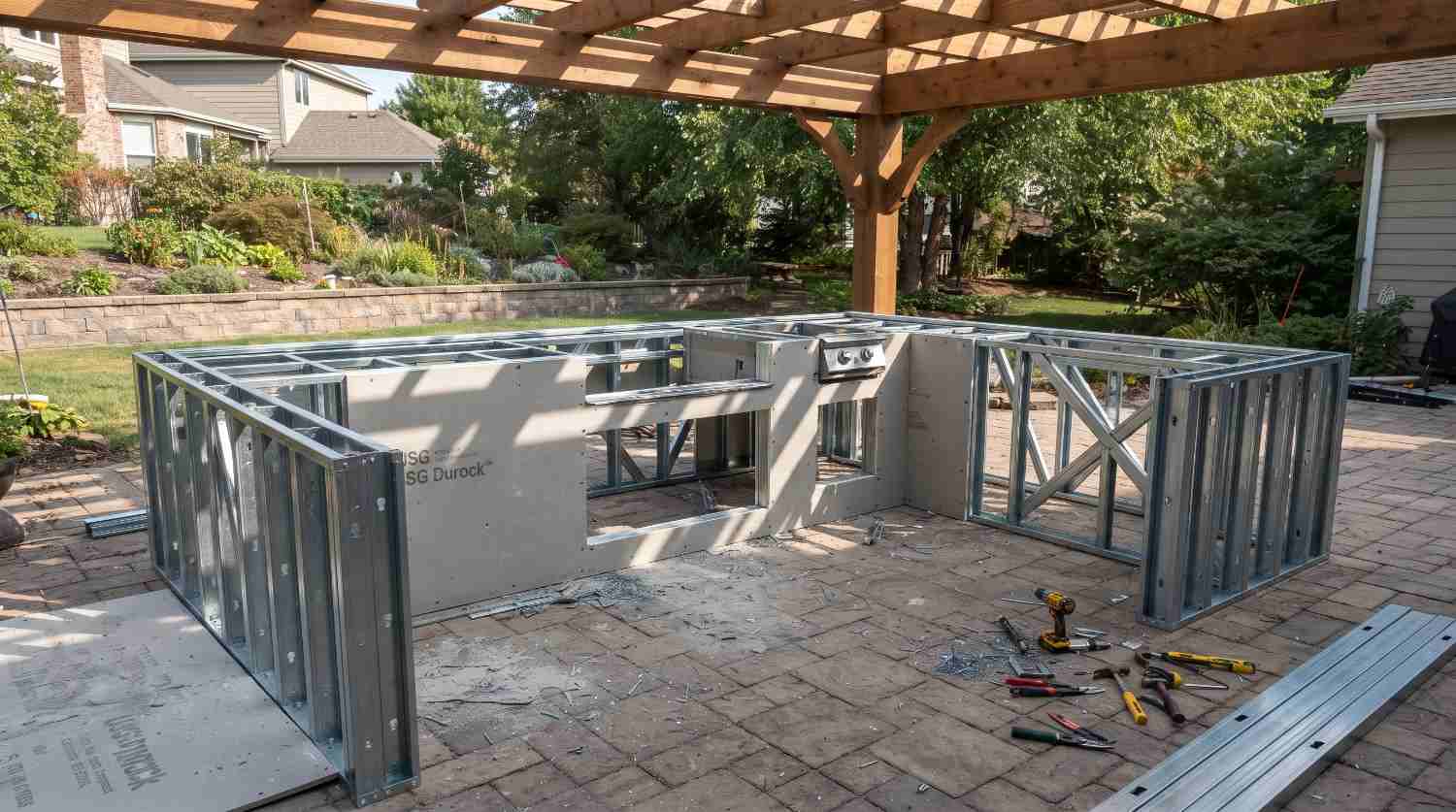
Recent work
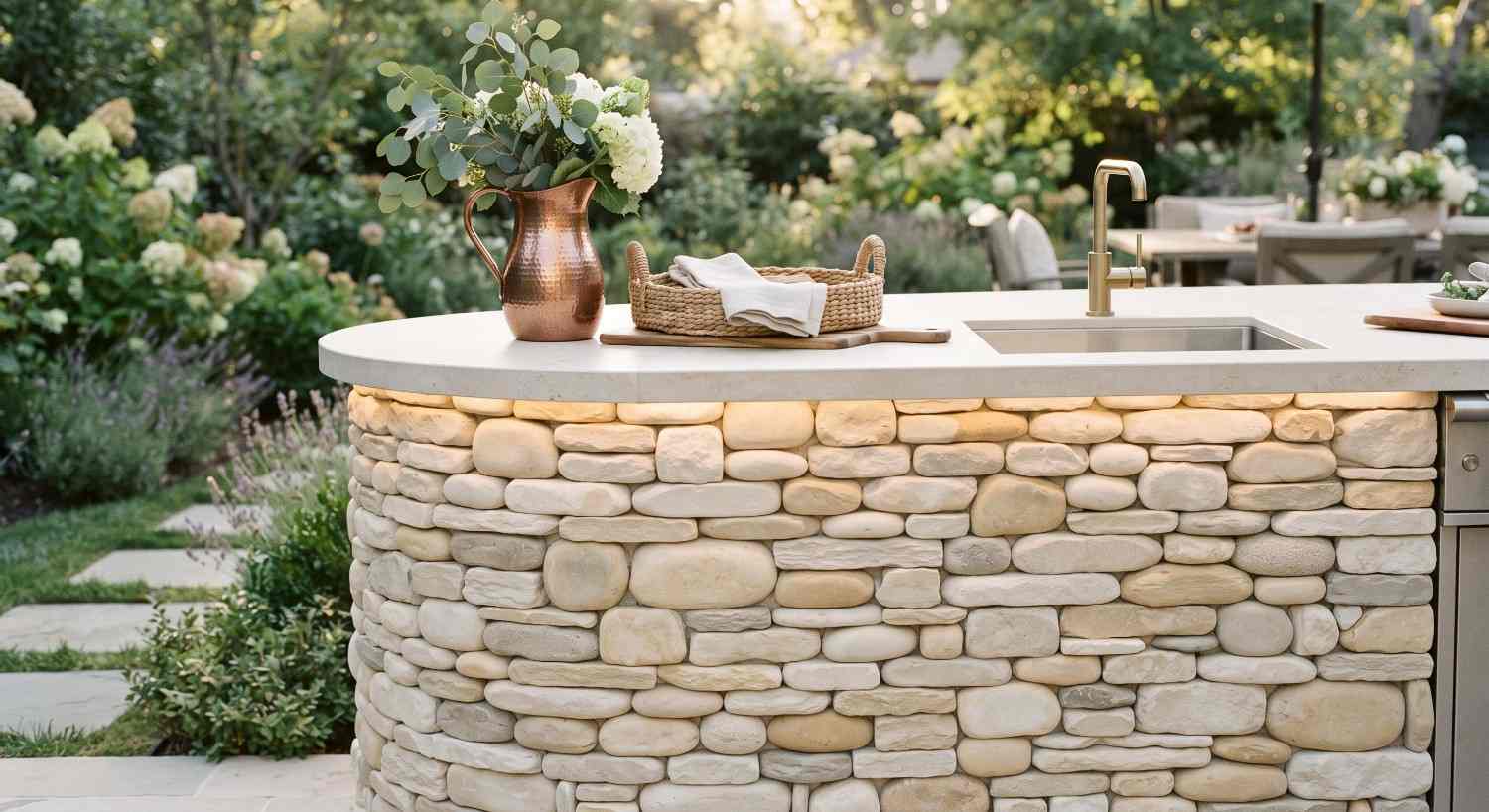
Our own work, photographed on site.
Approach
Which approach fits your space?
Outdoor Kitchen Construction
Integrate a pizza oven or smoker into a full kitchen build. Explore Construction
Covered Outdoor Kitchens
Add shade or weather protection over the oven area. Explore Covered Kitchens
Outdoor Kitchen Design
Plan clearance and placement before construction begins. Explore Design
Fire Pits & Fireplaces
Consider a separate gathering feature alongside your oven. Explore Fire Pits
Related
You may also be considering
Ready to Place Your Oven or Smoker With Real Fence Clearance in Mind?
Start with what your fence is actually made of. We'll walk through clearance, fuel type, and placement that protects it.
Or call (208) 856-3233Common Questions
Frequently asked questions
Cost depends on the unit’s size, fuel type, materials, foundation requirements, and venting work involved. Since this varies significantly by project, it’s best discussed directly for your specific plans.
Yes. Vinyl softens and can warp at heat levels that wood fencing typically tolerates without issue, which makes clearance from a wood-fired oven or smoker more important where vinyl fencing is installed.
Gas produces lower sustained heat output, which can be the more forgiving choice near a vinyl fence line. Wood-fired ovens remain an option with proper clearance planning.
Clearance requirements depend on the unit’s size, fuel type, and fence material specifically. This should be confirmed for your specific installation and site.
Permit requirements depend on the specific scope of work, particularly for structural, gas, or venting elements. Confirm requirements for your project with the City of Meridian and the appropriate authorities.
Often, yes, depending on available space, clearance, and utility access. A site assessment is the best way to confirm what’s possible for your existing layout.
It’s worth factoring in, since dry mulch and newly planted shrubs sit closer to heat sources than established landscaping typically does. Clearance planning should account for it.
Many can, particularly with proper insulation and, where space allows, a covered structure that reduces wind and precipitation exposure.
Explore Built-In Pizza Ovens and Smokers across Meridian
Ready to Add a Centerpiece That Respects Your Fence Line?
Every newer Northwest Meridian yard has a spot that works. Let's find yours with real clearance in mind.
Get a Free Site Measure