Southwest Meridian
Outdoor Kitchen Repair in Southwest Meridian
A sink faucet that's lost pressure or an ice maker that's stopped producing cleanly on a Southwest Meridian well-served property doesn't always point to a broken part.
10 years building in Meridian
70+ outdoor kitchens completed
RCE-69511 Idaho registration
Reviewed by Janine Burrows Outdoor Kitchen Designer and Erica Jensen Office Manager, Outdoor Kitchen & Patio
On a well-served property west of Ten Mile Road, mineral content in the water supply is worth ruling in or out early whenever a sink, ice maker, or other water-using fixture starts behaving oddly. Scale buildup develops gradually inside pipes and small mechanical parts, restricting flow or clogging components well before it’s visible from outside.
On a standard city-serviced lot to the east, that possibility doesn’t apply, and a similar symptom more likely points to a mechanical or installation issue instead. Knowing which type of property you’re on is a genuinely useful first filter before diagnosing further.
Local Planning
What Outdoor Kitchen Repair Looks Like in Southwest Meridian
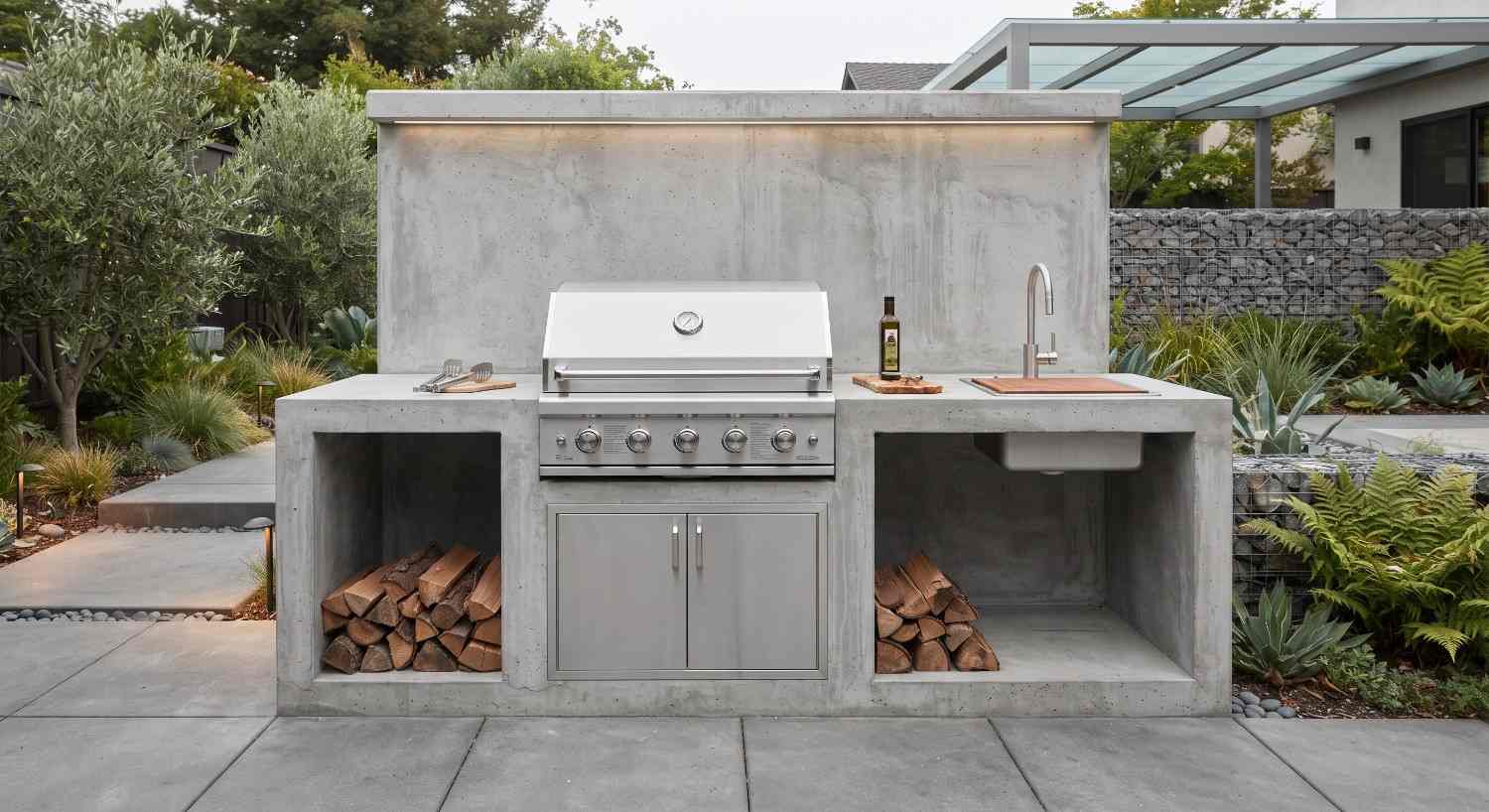
Repairs generally fall into a few categories: appliance issues, like a grill that won’t ignite reliably; surface damage, like cracked or stained countertops; structural movement, like gaps at seams or doors that no longer close properly; and utility problems, like a gas line, water line, or electrical connection that’s stopped working correctly.
On a well-served acreage property, water-related issues deserve a specific look at mineral scale before assuming a fixture or appliance has simply failed. A faucet with reduced flow, an ice maker producing cloudy or oddly shaped ice, or a valve that’s become difficult to operate can all trace back to scale buildup rather than a defective part. Clearing or replacing the affected component addresses the symptom, but understanding the water’s mineral content helps prevent the same issue from recurring.
Regional Considerations
Why Idaho Winters Cause So Many Outdoor Kitchen Repairs
Most outdoor kitchen damage in this climate traces back to freeze/thaw movement, which applies the same way regardless of whether a property is on city water or a private well. A footing that wasn’t set deep enough can lift slightly over successive winters, showing up later as cracked countertops or misaligned cabinet doors.
On a well-served property, freeze/thaw and mineral scale are two entirely separate causes worth distinguishing during a repair. A cracked countertop points toward foundation movement. A clogged or slow-flowing fixture points toward water quality. Treating both as possibilities, rather than assuming one explains everything, is what leads to an accurate diagnosis here.
Reduced water flow could be scale, or it could be something else. Let's find out which, so the fix actually holds.
Get a Free Site MeasureFind out what your yard allows
We come out and tell you what you are allowed to build before anything is drawn. On site, at no cost.
Or call (208) 856-3233What Typically Needs Repair
Common Outdoor Kitchen Repair Issues
Well Water Scale Buildup
Mineral deposits restricting flow in faucets, ice makers, or valves, specific to properties on private well water.
Appliance Problems
Grills that won’t ignite consistently or burners with uneven heat, which can occur on any property regardless of water source.
Countertop Damage
Cracks, stains, or chips, often tied to foundation movement from freeze/thaw cycles.
Cabinet Issues
Doors that no longer close properly, corrosion, or hardware that’s failed after years of use.
Structural Movement
Gaps at seams or a base that’s no longer level, typically tied to footing depth issues.
What a Repair Assessment Looks At
What a Repair Assessment Looks At
Water Source and Mineral Content
Whether the property is on well or city water, and whether scale buildup is contributing to the issue.
Visible Damage
What’s actually cracked, corroded, misaligned, or failing.
Foundation Condition
Whether footings show signs of freeze/thaw movement.
Utility Connections
Whether gas or electrical lines are the actual source of the issue, separate from any water-related cause.
Scope of the Fix
Whether it’s a contained repair or a sign of a larger issue worth addressing.
Explore Outdoor Kitchen Remodel
Not sure if it's mineral buildup, foundation movement, or something else? A proper look tells you which.
Get a Free Site MeasureRepair Planning
Planning the Repair Around Your Southwest Meridian Property
Every repair starts with identifying what’s actually wrong, and on a Southwest Meridian property, that means considering water source as a genuine diagnostic factor alongside the usual possibilities. A well-served property adds mineral scale to the list of potential causes for a water-related issue, while a city-serviced lot rules that possibility out entirely.
From there, it’s a matter of scoping the repair honestly: clearing or replacing an affected fixture, addressing foundation movement, or both, depending on what the assessment actually reveals.
Process
From Problem to Repair
Confirm Your Water Source
Determine whether the property is on well or city water, since this shapes the diagnostic approach.
Assess the Issue
Identify what’s visibly wrong and gather context on when and how it started.
Diagnose the Cause
Determine whether it’s mineral scale, a material issue, foundation movement, or a utility failure.
Complete the Fix
Repair or replace the affected component, addressing the root cause where relevant.
Confirm the Fix Holds
Verify the repair addresses the actual problem rather than just the symptom.
Local Area Context
Outdoor Kitchen Repairs Across Southwest Meridian
West of Ten Mile Road, a real share of properties draw water from private wells, which introduces mineral scale as a genuine, area-specific repair factor that a city-serviced lot east of the road simply doesn’t have to consider. Foundation-related repairs from freeze/thaw movement apply equally on both sides.
The right fix depends on your specific property’s actual water source and history, not an assumption based on lot size alone.
Recent Work
Recent work
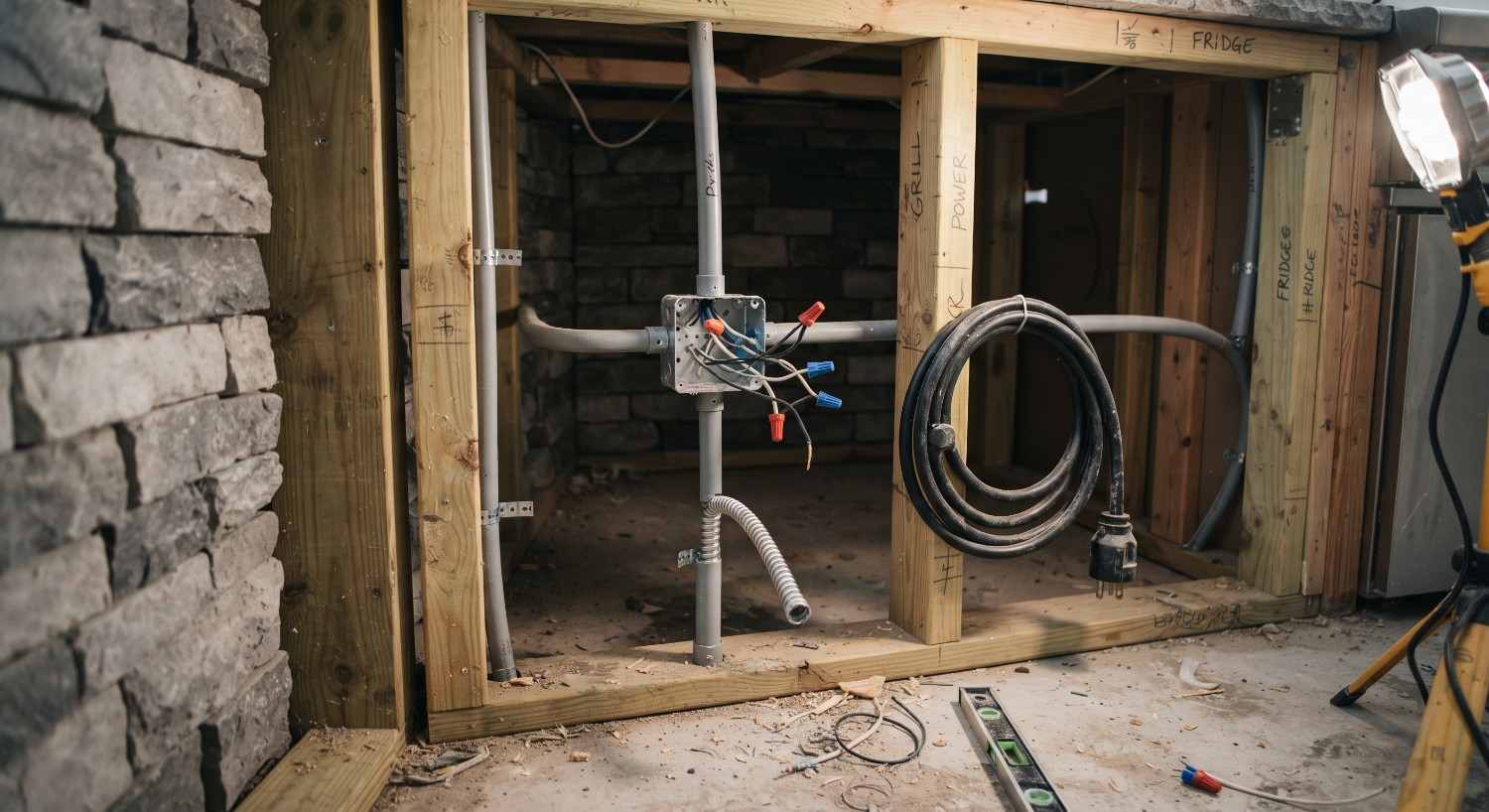
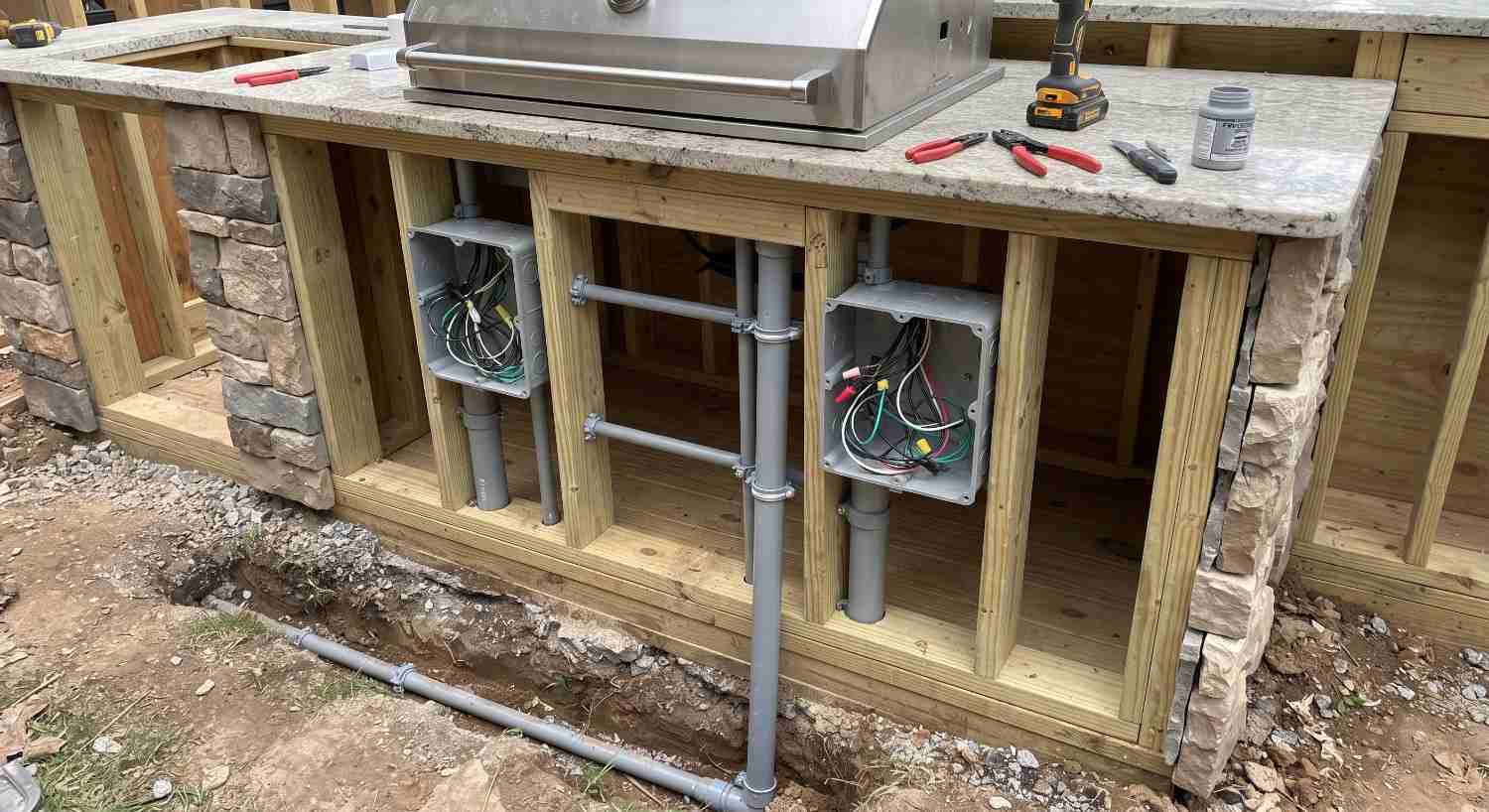
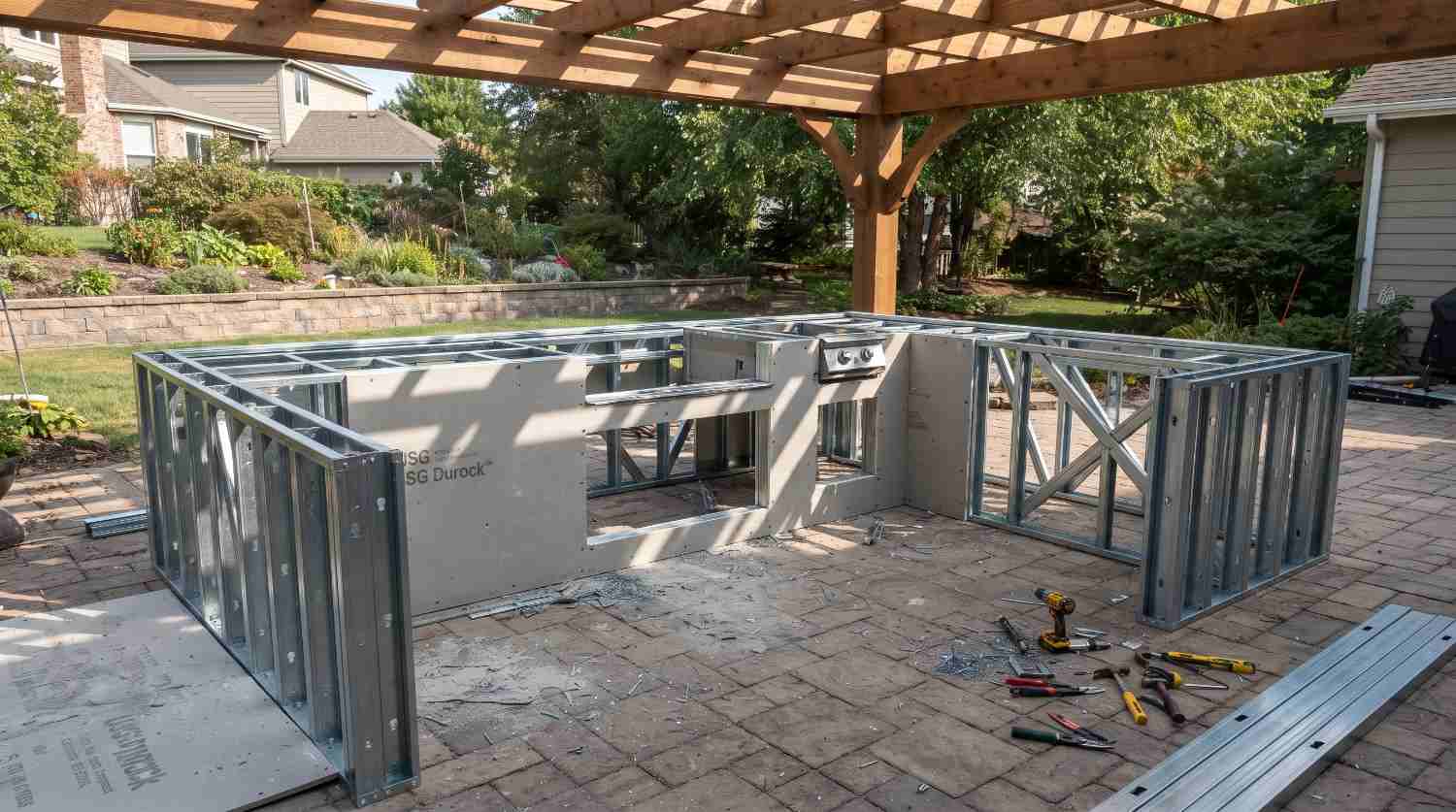
Our own work, photographed on site.

Approach
Which approach fits your space?
Winterization
Prevent future damage before the next freeze. Explore Winterization
Remodel
Best when repair issues point to a larger redesign. Explore Remodel
Countertop Replacement
Address cracked or damaged surfaces directly. Explore Countertops
Cabinet Repair
Fix or replace cabinetry affected by weather exposure. Explore Cabinets
Related
You may also be considering
Faucet or Ice Maker Not Working Right on Well Water?
Start with what you're seeing. We'll check whether it's mineral scale, a mechanical issue, or something else entirely.
Or call (208) 856-3233Common Questions
Frequently asked questions
Cost depends on what’s being repaired, the cause of the issue, and whether it’s a contained fix or points to a larger problem. Because this varies significantly by issue, it’s best discussed directly after an assessment.
Yes. Well water often carries more mineral content than treated city water, and that content can build up as scale inside fixtures, valves, and small appliance components over time, restricting flow or causing malfunctions.
A repair assessment can inspect the affected fixture or component directly to determine whether mineral deposits are the cause, rather than a defective part.
It’s typically tied to foundation movement from Idaho’s freeze/thaw cycles, regardless of whether the property is on well or city water.
Permit requirements depend on the specific scope of work, particularly for electrical, gas, or structural repairs. Confirm requirements for your project with the City of Meridian and the appropriate authorities.
A water treatment or filtration approach can reduce future mineral buildup, though this is a separate conversation from the immediate repair itself.
It depends on the issue and whether parts or materials need to be sourced. Contained repairs are often quicker; ones involving structural or utility work take longer.
Your property’s original construction records or a review of your water bill, or lack thereof, can typically confirm which type of water source you have.
Explore Outdoor Kitchen Repair across Meridian
Ready to Get It Looked At?
Well water or city water, every issue has a real cause. Let's find yours.
Get a Free Site Measure