Northeast Meridian
Outdoor Kitchen Repair in Northeast Meridian
A grill that suddenly won't hold a steady flame on an older Northeast Meridian property doesn't always point to the appliance itself.
10 years building in Meridian
70+ outdoor kitchens completed
RCE-69511 Idaho registration
Reviewed by Janine Burrows Outdoor Kitchen Designer and Erica Jensen Office Manager, Outdoor Kitchen & Patio
Gas piping installed decades ago on an established Northeast Meridian property was often galvanized steel or uncoated black iron, materials that were standard for their time but are more prone to internal corrosion than the corrugated stainless steel tubing used in newer installations. That corrosion builds up gradually inside the pipe, restricting flow long before it causes a visible external problem, which is why a repair here often starts with confirming exactly what material your line is actually made of.
A newer infill property or a section replaced during a past renovation might already be on modern tubing, but on an established home with its original gas run intact, older materials are a real possibility worth ruling in or out early.
Local Planning
What Outdoor Kitchen Repair Looks Like in Northeast Meridian
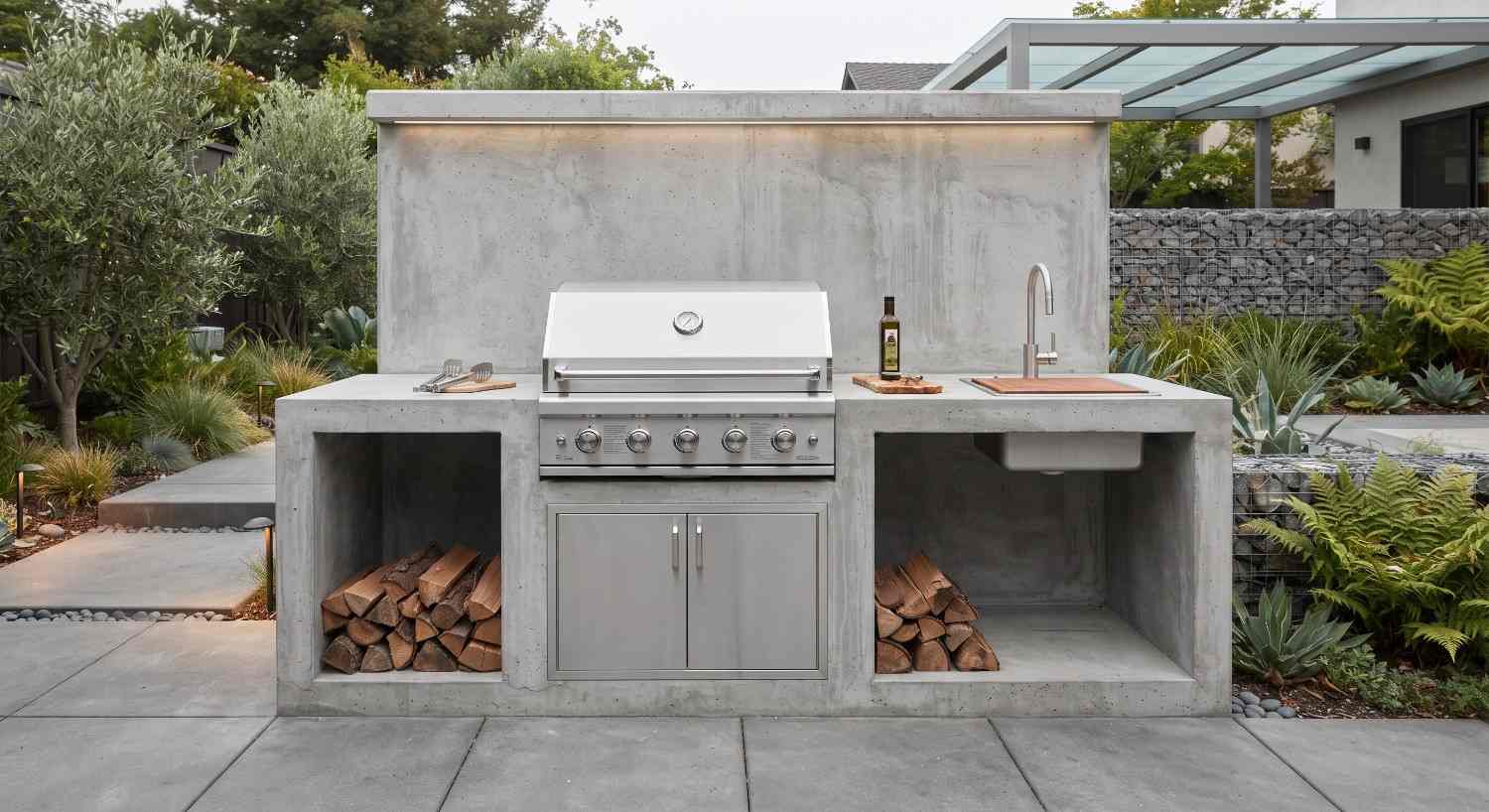
Repairs generally fall into a few categories: appliance issues, like a grill that won’t ignite reliably or holds an inconsistent flame; surface damage, like cracked or stained countertops; structural movement, like gaps at seams or doors that no longer close properly; and utility problems, like a gas line, water line, or electrical connection that’s stopped working correctly.
On an established property, a gas-related issue deserves particular attention to pipe material and age, since internal corrosion in older galvanized or steel lines can mimic the symptoms of a failing appliance almost exactly, inconsistent flame, reduced heat output, a burner that won’t stay lit. Diagnosing the actual cause means checking the line itself, not just replacing the grill and hoping the problem was there all along.
Regional Considerations
Why Idaho Winters Cause So Many Outdoor Kitchen Repairs
Most outdoor kitchen damage in this climate traces back to freeze/thaw movement, which applies here the same way it does anywhere in Meridian. On an established property, that movement has often had more decades to compound, showing up as cracked countertops or misaligned cabinet doors tied to a foundation that’s shifted gradually over a long stretch of winters.
Layered on top of that structural cause, older gas piping introduces a second, independent possibility that a newer property’s repair conversation wouldn’t need to include. Distinguishing between foundation-related symptoms and gas-line-related symptoms is what determines whether a repair addresses the actual problem or just one of two possible causes.
An older gas line and a shifting foundation can produce similar symptoms. Let's find out which one is actually behind yours.
Get a Free Site MeasureFind out what your yard allows
We come out and tell you what you are allowed to build before anything is drawn. On site, at no cost.
Or call (208) 856-3233What Typically Needs Repair
Common Outdoor Kitchen Repair Issues
Gas Line Issues
Reduced flow or inconsistent flame tied to internal corrosion in older galvanized or steel piping, more common on established properties.
Appliance Problems
Grills that won’t ignite consistently or burners with uneven heat, which can mimic a gas line issue closely enough to warrant checking both.
Countertop Damage
Cracks, stains, or chips, often tied to years of accumulated foundation movement on an older property.
Cabinet Issues
Doors that no longer close properly, corrosion, or hardware that’s failed after years of use.
Structural Movement
Gaps at seams or a base that’s no longer level after decades of freeze/thaw cycles.
What a Repair Assessment Looks At
What a Repair Assessment Looks At
Gas Line Material and Age
Whether your line is older galvanized or steel piping versus modern corrugated stainless steel tubing.
Visible Damage
What’s actually cracked, corroded, misaligned, or failing.
Foundation History
Whether footings show signs of accumulated freeze/thaw movement over the kitchen’s lifespan.
Utility Connections
Whether water or electrical lines are contributing to the issue alongside a possible gas concern.
Scope of the Fix
Whether it’s a contained repair or a sign of a larger issue worth addressing.
Explore Outdoor Kitchen Remodel
Not sure if it's your grill or your gas line? A proper look tells you which, and how old that line actually is.
Get a Free Site MeasureRepair Planning
Planning the Repair Around Your Northeast Meridian Property
Every repair here starts with identifying what’s actually wrong, which on an established property means considering gas line material and age as a genuine possibility alongside the usual suspects of appliance wear and foundation movement. A symptom that looks like a failing grill can just as easily be an aging pipe that’s gradually restricting flow.
From there, it’s a matter of scoping the repair honestly, replacing a compromised section of older piping where needed, rather than swapping appliances and hoping the real cause was addressed along the way.
Process
From Problem to Repair
Assess the Issue
Identify what’s visibly wrong and gather context on when and how it started.
Check Gas Line Material and Age
Determine whether older galvanized or steel piping could be contributing to the symptoms.
Diagnose the Cause
Determine whether it’s a material issue, aging gas line, foundation movement, or appliance defect.
Complete the Fix
Repair or replace the affected component, addressing the root cause where relevant.
Confirm the Fix Holds
Verify the repair addresses the actual problem rather than just the symptom.
Local Area Context
Outdoor Kitchen Repairs Across Northeast Meridian
Established Northeast Meridian properties are more likely than newer parts of the city to still have original gas piping installed decades ago, using materials like galvanized steel that are more prone to internal corrosion than what’s used in new installations today. That makes gas line condition a genuinely relevant, area-specific diagnostic factor here, alongside the foundation-related wear common to any older kitchen.
Either way, the right fix depends on what’s actually happening with your specific kitchen and its specific gas line history, not an assumption based on how old the area generally is.
Recent Work
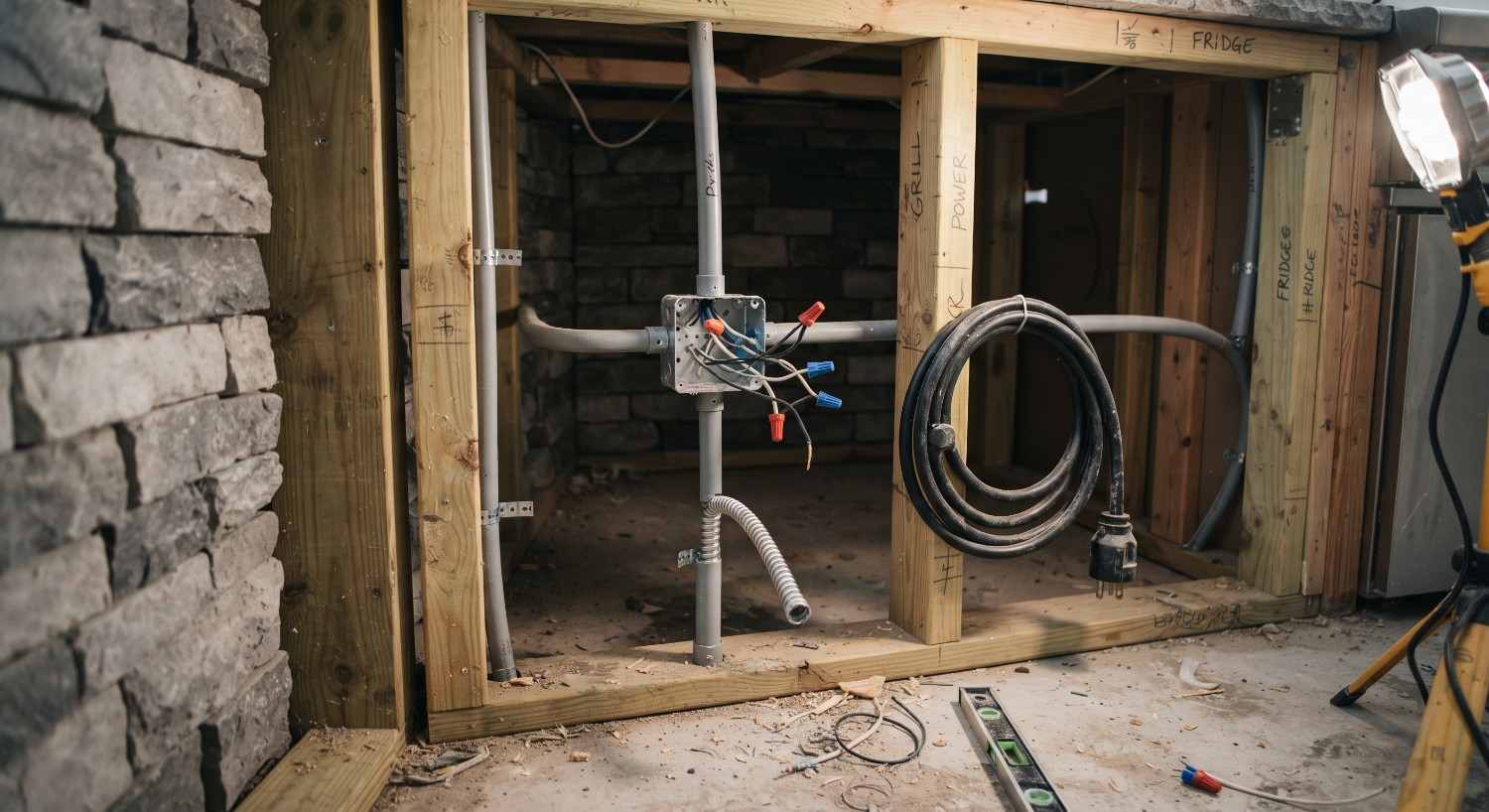
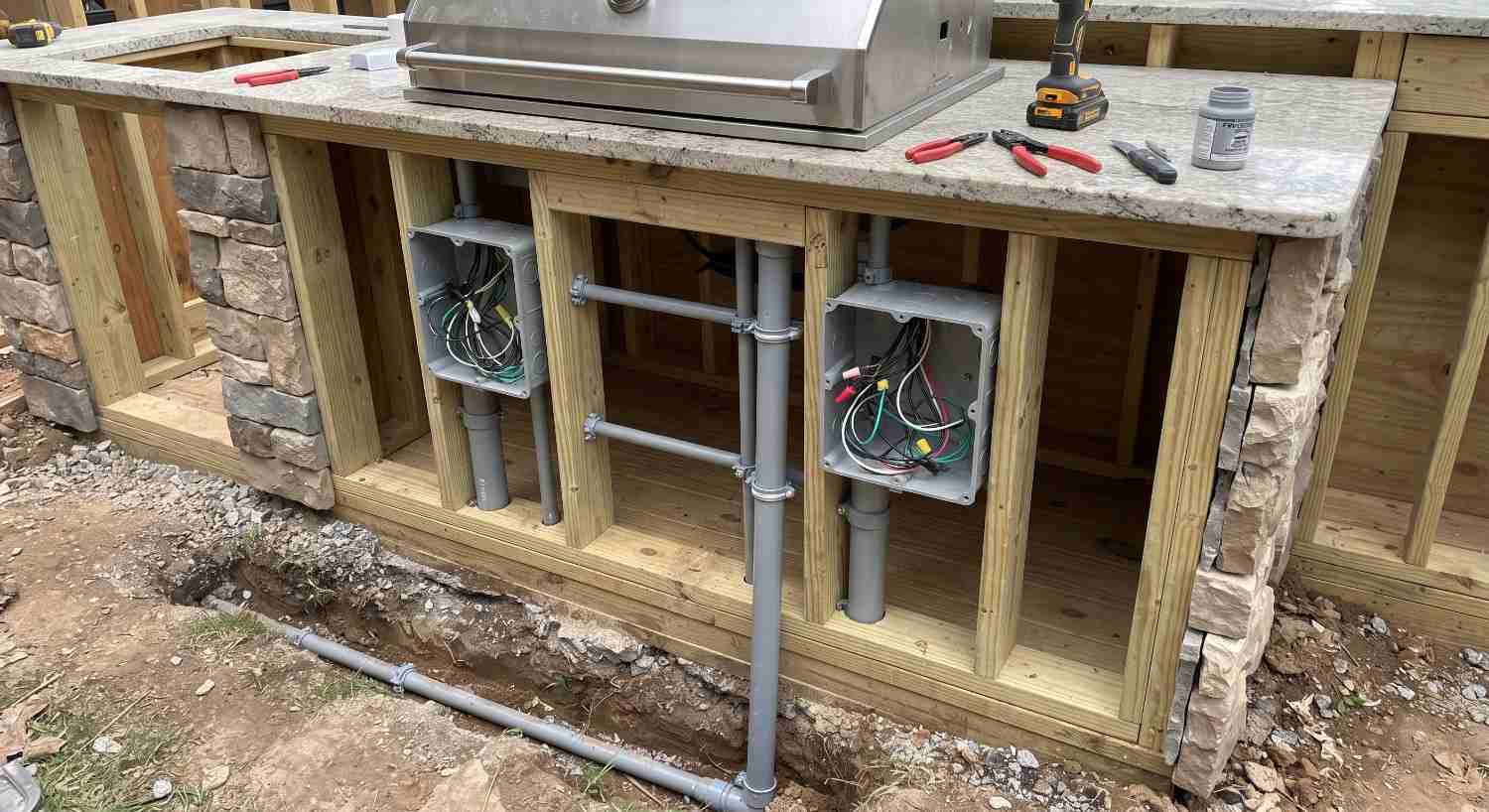
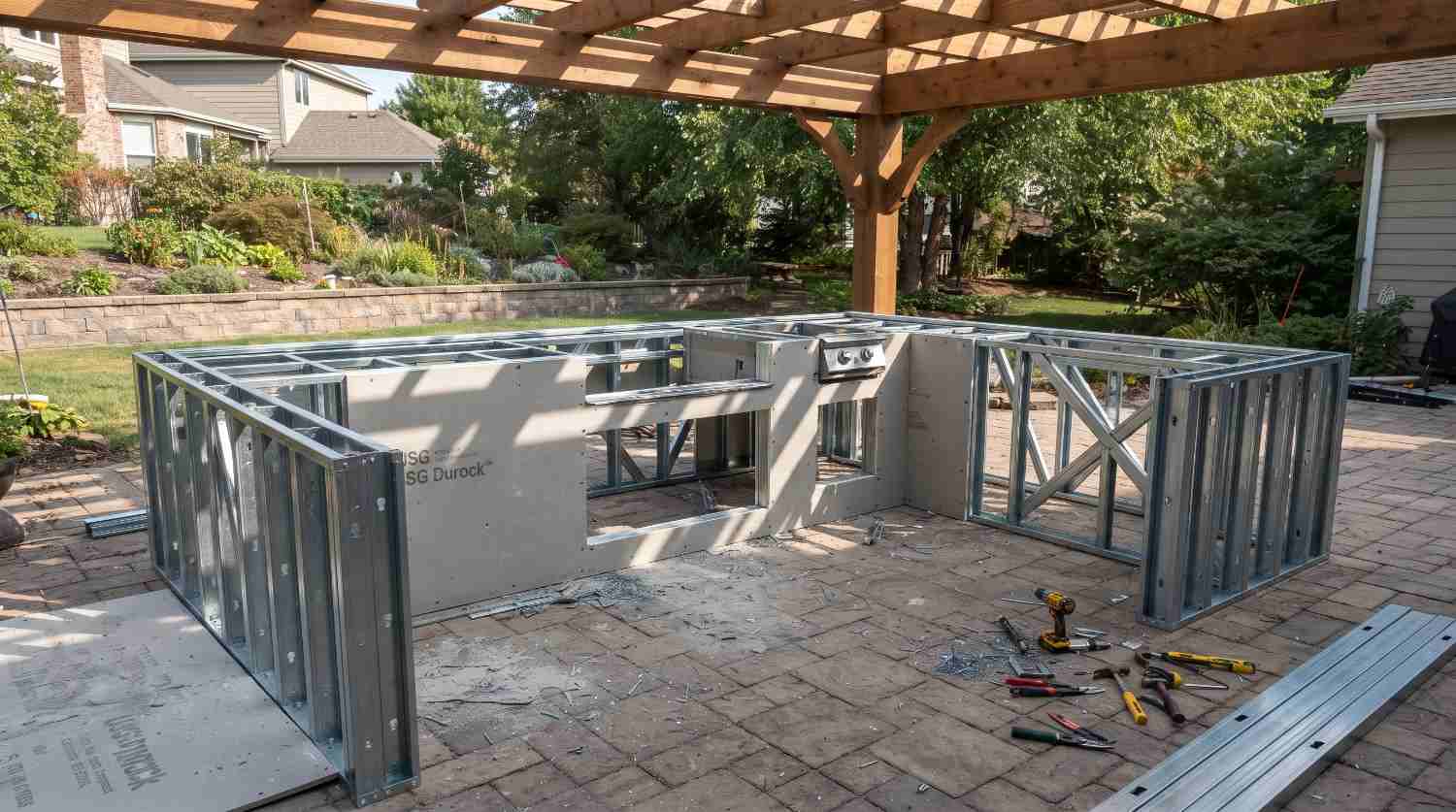
Recent work
Our own work, photographed on site.

Approach
Which approach fits your space?
Winterization
Prevent future damage before the next freeze. Explore Winterization
Remodel
Best when repair issues point to a larger redesign. Explore Remodel
Countertop Replacement
Address cracked or damaged surfaces directly. Explore Countertops
Cabinet Repair
Fix or replace cabinetry affected by years of weather exposure. Explore Cabinets
Related
You may also be considering
Grill Acting Up on an Established Kitchen?
Start with what you're seeing. We'll check whether it's the appliance, your gas line's age and material, or something else entirely.
Or call (208) 856-3233Common Questions
Frequently asked questions
Cost depends on what’s being repaired, the cause of the issue, and whether it’s a contained fix or points to a larger problem, including whether older gas piping needs to be replaced. Because this varies significantly by issue, it’s best discussed directly after an assessment.
A professional assessment can identify your pipe’s material and estimate its age, especially if your outdoor kitchen’s gas run hasn’t been touched since the home was originally built.
Yes. Internal corrosion in older galvanized or steel piping can restrict gas flow enough to cause inconsistent flame or reduced heat output, symptoms that closely resemble a failing grill or burner.
It’s often a sign that the foundation has been shifting gradually due to freeze/thaw movement over the kitchen’s lifespan, rather than a single recent event.
Permit requirements depend on the specific scope of work, particularly for electrical, gas, or structural repairs. Confirm requirements for your project with the City of Meridian and the appropriate authorities.
It’s worth having assessed, since internal corrosion can worsen gradually without obvious warning signs until flow is significantly restricted.
It depends on the issue and whether parts or materials need to be sourced. Contained repairs are often quicker; ones involving gas line replacement or structural work take longer.
That’s a common and reasonable question on an older kitchen. An assessment that checks both is the most reliable way to find the actual cause.
Explore Outdoor Kitchen Repair across Meridian
Ready to Get It Looked At?
Every issue in an established kitchen has a real cause, sometimes above ground, sometimes in the line itself. Let's find yours.
Get a Free Site Measure